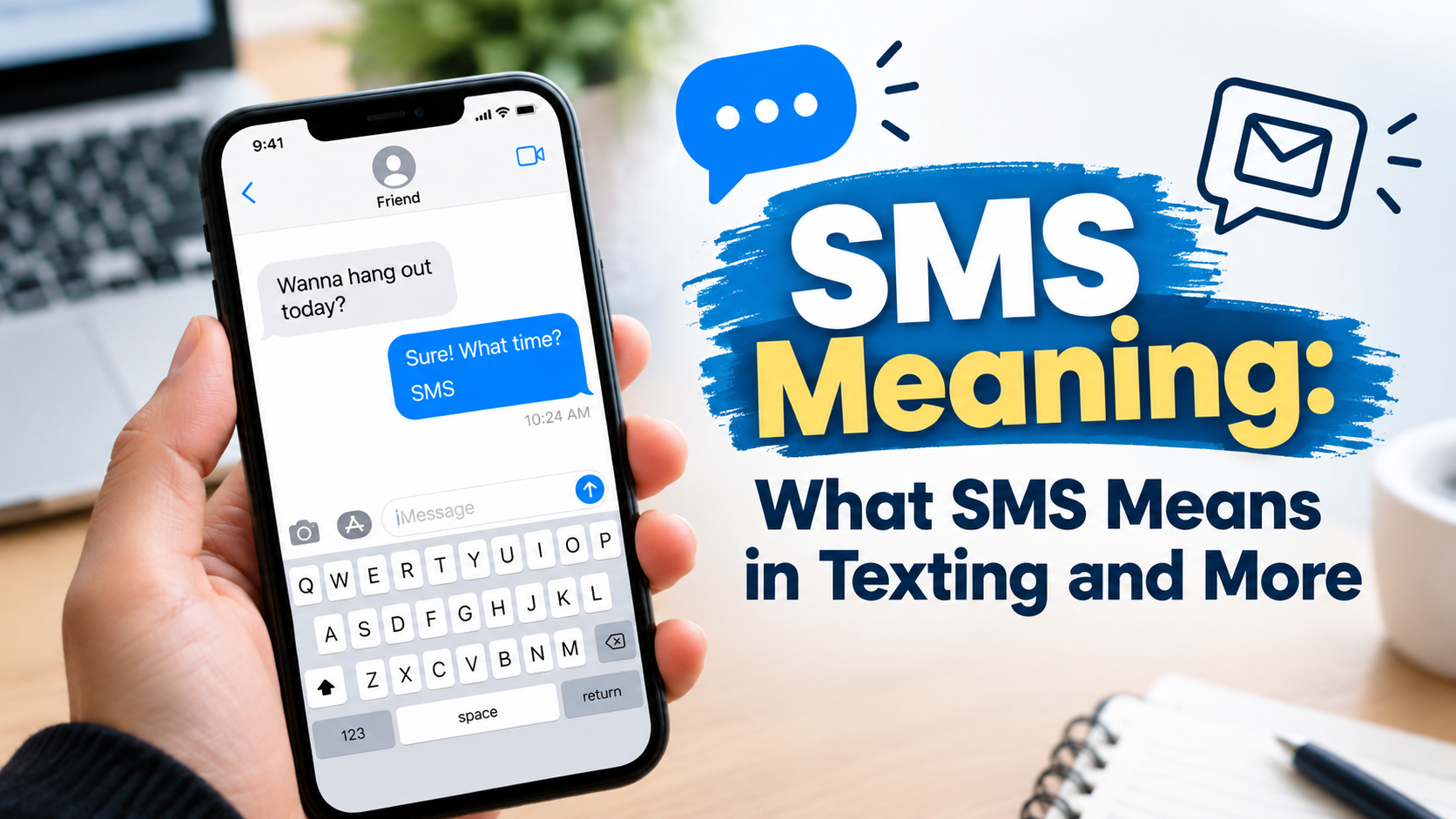
SMS Meaning refers to Short Message Service, a communication system that lets people send and receive short text messages on mobile phones. Today, SMS is one of the most familiar forms of text messaging, even though many people also use apps such as social media and internet-based messaging platforms. When someone says “send me an SMS,” they usually mean a text message sent through a cellular network rather than an internet connection.
The history of SMS is closely connected to the development of mobile communication and wireless technology. Unlike modern messaging apps, traditional SMS does not require Wi-Fi, mobile data, or a separate messaging account. Instead, it uses a mobile network, making it useful when internet access is limited.
In everyday communication, SMS can be used for personal messages, business communication, verification codes, appointment reminders, and service notifications. Many companies also use SMS marketing to reach customers quickly. The term can also appear in phrases such as SMS text, SMS message, and text messaging service.
Quick Answer
SMS Meaning is Short Message Service, a mobile communication system for sending text messages through cellular networks. In the USA, SMS commonly means a standard text message, although newer messaging services can offer richer features.
TL;DR
- SMS stands for Short Message Service.
- It became widely popular with the growth of mobile phones.
- In America, SMS usually means a regular cellular text.
- SMS doesn’t require a social media account or messaging app.
- Modern phones can combine SMS with newer messaging systems.
- Businesses also use SMS for alerts, reminders, and verification.
What Does SMS Mean?
SMS is an abbreviation for Short Message Service. It describes a system that allows mobile devices to exchange short written messages over cellular networks.
The term is technical, but Americans usually use “text” instead. For example, someone might say, “I sent you a text,” even though that message could technically be an SMS.
The Basic Definition
SMS allows a phone to send a short written message to another mobile device. The message travels through a carrier’s cellular infrastructure.
Unlike internet-based services, traditional SMS doesn’t depend on Wi-Fi or mobile data. However, cellular service is normally required.
SMS and Texting
The words SMS and texting are closely connected, but they’re not always identical.
“Texting” describes the activity of exchanging written messages. SMS is one technology that makes that activity possible.
How Does SMS Work?
SMS works through a mobile carrier’s network. When you send a message, the cellular system helps route it toward the recipient’s phone.
If the recipient isn’t immediately available, the network can often store the message temporarily. Once the phone becomes reachable, the message may be delivered.
A Simple SMS Process
- You type a message on your phone.
- Your phone sends it through the cellular network.
- The carrier routes the message toward the recipient.
- The recipient’s mobile network delivers it to their phone.
Why This Matters
This process helps explain why SMS can work differently from internet messaging. It also explains why traditional SMS can remain useful when an internet connection isn’t available.
When Was SMS Invented?
The foundations of SMS developed during the 1980s as engineers worked on digital cellular communication. SMS was designed as a messaging feature within emerging mobile telecommunications standards.
A major milestone came in December 1992, when the first known SMS message was sent through a mobile network in the United Kingdom.
The message was sent by Neil Papworth to Vodafone executive Richard Jarvis. It famously read, “Merry Christmas.”
Early Development
SMS wasn’t initially created as the main reason people would buy mobile phones. Instead, it began as a relatively limited feature of cellular systems.
However, that changed rapidly. As mobile phones became more common, people discovered that short messages were convenient and inexpensive.
The Rise of Mobile Texting
During the 1990s and early 2000s, SMS became increasingly popular worldwide. Mobile users began using it for quick conversations instead of making phone calls.
Why Did SMS Become So Popular in America?
SMS became especially influential as mobile phones became normal household devices in the United States. Texting offered a quick alternative to voice calls.
For many Americans, sending a short message also felt less intrusive than calling someone. The recipient could respond whenever convenient.
Cultural Changes
Texting gradually changed everyday communication habits. People began using short messages for plans, greetings, reminders, and casual conversations.
As a result, “text me” became a familiar phrase in American English.
Everyday American Uses
- Making quick plans with friends.
- Checking whether someone arrived safely.
- Sending short family updates.
- Sharing reminders about appointments or events.
- Communicating when a phone call isn’t convenient.
What Is the Difference Between SMS and Texting?
SMS is a specific messaging technology, while texting is a broader everyday term.
For example, people may describe messages sent through several technologies as “texts.” Technically, however, some modern messages may use internet-based systems instead of traditional SMS.
SMS vs. MMS
MMS stands for Multimedia Messaging Service. It was developed to support content such as pictures, audio, and longer multimedia messages.
SMS traditionally focuses on text. MMS expanded mobile messaging beyond simple written communication.
SMS vs. Internet Messaging
Internet messaging services use an internet connection. Examples include many modern messaging apps and platform-based chat systems.
These services can support features such as typing indicators, read receipts, high-quality media, group tools, and reactions.
| Messaging Type | Main Connection | Common Use in the USA | Typical Features |
| SMS | Cellular network | Everyday texting | Short written messages |
| MMS | Cellular network | Media messages | Images and multimedia |
| Internet chat | Internet | App-based conversations | Rich media and reactions |
| Internet | Formal communication | Longer messages and attachments |
What Does SMS Symbolize in Modern Communication?
SMS isn’t a traditional cultural symbol like a flag, color, or religious image. Instead, it represents a major shift in how people communicate.
In modern American culture, SMS can symbolize connection, convenience, speed, and accessibility. It also represents the movement from voice-centered communication toward written mobile communication.
Connection
A text message can create a feeling of connection without requiring a phone call. A simple message can remind someone that you’re thinking about them.
Convenience
SMS supports communication when people are busy, working, traveling, or unable to talk.
Digital Accessibility
Because SMS has been built into mobile networks for decades, it remains familiar to a very broad range of users.
What Are the Emotional Associations of SMS?
Although SMS is a technical system, the messages sent through it can carry strong emotions.
A short text can communicate affection, excitement, concern, humor, frustration, or urgency. Therefore, the emotional meaning usually comes from the words and context rather than SMS itself.
Common Emotional Uses
- “Good morning” can express affection or attention.
- “Are you okay?” can communicate concern.
- “We need to talk” may create anxiety.
- “Congratulations!” can express excitement and support.
- A simple “Thanks” can show appreciation.
Why Tone Can Be Difficult
Written messages don’t include facial expressions or vocal tone. Therefore, short SMS messages can sometimes be misunderstood.
A message such as “Okay” might sound neutral to one person but dismissive to another. Context and the relationship between people strongly affect interpretation.
How Is SMS Used Today?
SMS remains useful even though smartphones offer many internet-based communication options.
In the United States, companies, schools, organizations, and individuals still use SMS for practical communication. Its simplicity can be an advantage.
Personal Communication
Friends and family members continue to use standard texting for quick conversations. SMS can be especially useful when someone doesn’t share the same messaging app.
Business Communication
Organizations may send appointment reminders, delivery updates, notifications, and verification codes through text messages.
Public Notifications
Text-based alerts can also provide timely information. Depending on the system, these may include weather, emergency, transportation, or community notices.
Is SMS Still Important on Smartphones?
Yes. Smartphones have introduced richer messaging systems, but SMS continues to serve an important role.
One major advantage is interoperability. A person can often send a traditional text to another mobile number without knowing which messaging app the recipient uses.
Why People Still Use It
- It works across many different phone types.
- It doesn’t require the same messaging application.
- It can function without Wi-Fi.
- It supports quick communication with mobile numbers.
- Many organizations already use SMS infrastructure.
The Modern Messaging Landscape
Modern phones may automatically choose different messaging technologies depending on the devices and services involved.
As a result, users don’t always know whether a message was delivered through traditional SMS or a newer system.
What Does SMS Mean on iPhone and Android?
On both iPhone and Android devices, SMS can refer to traditional carrier-based text messaging.
However, modern phones also support newer communication systems. Apple’s Messages app, for example, can use different technologies depending on the recipient and device.
Android phones can similarly support multiple messaging standards and services.
Why the Difference Matters
The visual appearance of a conversation doesn’t always tell you exactly which underlying technology is being used.
Therefore, “text message” is often the simplest everyday description.
Is SMS Used for Business and Security?
SMS has become an important tool for practical communication. Businesses frequently use it to reach customers directly on their mobile phones.
Security systems may also send temporary verification codes through SMS. These codes can confirm that someone has access to a particular phone number.
Common Business Uses
- Appointment reminders.
- Delivery notifications.
- Customer updates.
- Order confirmations.
- Temporary verification codes.
- Service notifications.
A Note About Security
SMS can be convenient, but it isn’t considered the strongest possible security method for every situation. Phone-number attacks and message interception risks have made stronger authentication methods increasingly important.
What Are Common Misunderstandings About SMS?
One common misunderstanding is that SMS and every form of texting are exactly the same.
In everyday American speech, that distinction usually doesn’t matter. Technically, however, texting can involve SMS, MMS, or internet-based messaging.
Another Misunderstanding
Some people believe SMS is outdated simply because smartphones offer advanced messaging apps.
However, SMS continues to provide basic mobile communication. Its broad compatibility keeps it useful.
Common Confusions
- SMS doesn’t mean social media messaging.
- SMS isn’t the same as email.
- SMS doesn’t require a dedicated chat app.
- SMS and MMS are different technologies.
How Has SMS Meaning Changed Over Time?
The technical meaning of SMS has remained fairly stable. Its cultural role, however, has changed dramatically.
In the early mobile era, SMS was an innovative way to send short written messages. Today, texting is an ordinary part of daily life.
From Technology to Everyday Language
People once needed to understand mobile technology to appreciate SMS. Now, most users simply say “text.”
As a result, the acronym is more common in technical, business, and telecommunications settings.
A Changing Communication Culture
Texting also influenced how people think about availability. A person can receive a message without immediately answering a phone call.
That flexibility helped establish new expectations around quick communication.
Does SMS Have a Spiritual or Cultural Meaning?
SMS doesn’t have a widely recognized spiritual meaning. It is primarily a communications technology rather than a sacred symbol.
Still, communication itself has deep cultural importance. Across many traditions, sending words can represent connection, remembrance, encouragement, and community.
A Broader Human Meaning
From handwritten letters to modern texts, communication helps people maintain relationships across distance.
Therefore, SMS can be viewed symbolically as part of humanity’s continuing effort to stay connected.
How Does SMS Appear in Modern Culture?
SMS has influenced everyday language, entertainment, advertising, and social behavior. Short messages helped normalize abbreviations, informal spelling, and rapid digital conversations.
Today, these habits appear across smartphones and online platforms.
Social Communication
People often use short forms, emojis, reactions, and conversational fragments when messaging. These habits developed alongside mobile communication.
Popular Culture
Movies, television shows, advertisements, and online content frequently portray texting as a normal part of relationships and daily life.
Personal Identity
For younger generations especially, messaging can be an important part of social identity. The way someone texts may reflect humor, age group, friendship style, or personality.
Conclusion
SMS Meaning is rooted in the simple idea of sending short written messages through mobile networks. In America, SMS has become closely associated with everyday texting, convenience, connection, and fast communication.
Although newer messaging systems offer more features, SMS remains an important part of mobile communication. Its history also shows how a technical invention can become an ordinary part of culture.
Understanding SMS gives us a clearer view of how communication changed from phone calls to instant written conversations. Today, even a simple text reflects that larger history of staying connected.
FAQs
What does SMS stand for?
SMS stands for Short Message Service. It is a mobile communication technology designed for sending short written messages through cellular networks.
Is SMS the same as a text message?
Usually, people use the terms interchangeably in everyday conversation. Technically, however, “text message” can describe messages sent through technologies other than traditional SMS.
Does SMS require Wi-Fi?
Traditional SMS doesn’t require Wi-Fi or mobile internet. It generally uses a cellular network to send and receive messages.
What is the difference between SMS and MMS?
SMS traditionally handles text messages, while MMS supports multimedia content such as pictures. MMS was created to expand mobile messaging beyond plain text.
Why is SMS still used?
SMS remains useful because it works across many mobile devices and doesn’t require everyone to use the same messaging app. Businesses also use it for reminders, notifications, and verification messages.
Is SMS available on iPhone and Android?
Yes. Both iPhone and Android devices can support traditional SMS. However, modern phones may use other messaging technologies when available.
Does SMS have a symbolic meaning?
SMS doesn’t have a traditional spiritual or cultural symbolism. However, it can represent modern connection, convenience, communication, and the changing way people maintain relationships.




1 thought on “SMS Meaning: What SMS Means in Texting and More”