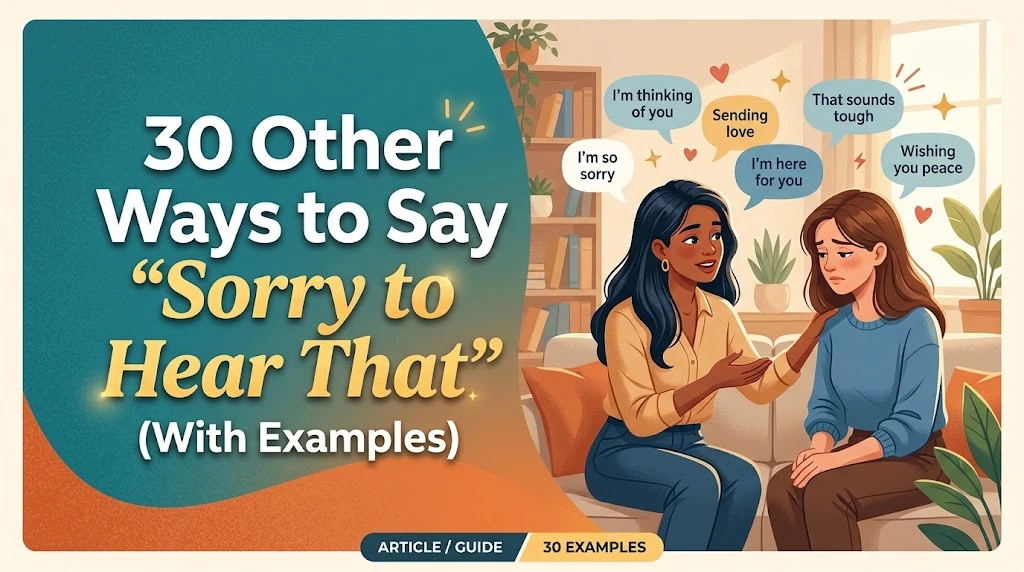
There are many natural and meaningful ways to say “Sorry to hear that” in English. Some expressions sound formal, some sound casual, some sound deeply caring, and some sound more emotional or supportive. Choosing the right phrase helps your words feel more sincere and more human.
When someone shares sad news, the right words can bring real comfort. Instead of repeating “Sorry to hear that” every time, you can use different expressions that sound more warm, thoughtful, respectful, professional, or heartfelt depending on the situation.
Learning different ways to say “Sorry to hear that” helps you respond more naturally in texts, emails, sympathy messages, and everyday conversations. Below, the expressions are divided into three sections, with 10 alternatives in each section so the list is easy to read and use.
Did You Know About “Sorry to Hear That”?
The phrase “Sorry to hear that” is one of the most common English responses to sad or disappointing news. It shows empathy, concern, and emotional support in a simple way.
Different alternatives can change the tone. Some sound formal, some sound casual, some sound deeply caring, and some sound more polished or diplomatic. Choosing the right phrase helps your message feel more personal and appropriate.
What Does “Sorry to Hear That” Mean?
“Sorry to hear that” means you feel sympathy, concern, or sadness after learning unpleasant news. It is a kind and respectful way to acknowledge someone’s difficulty.
It can be replaced with phrases that sound more formal, more comforting, more emotional, or more professional depending on the audience and context.
Professional or Political Way to Say “Sorry to Hear That”
In professional, public, or political settings, it is often better to sound composed and respectful. Instead of saying “Sorry to hear that,” you can say:
- That is unfortunate
- I’m sorry to learn that
- Please accept my sympathy
- That must be difficult
- I hope things improve soon
These options sound more polished and suitable for official communication.
#1 I’m sorry to hear that
Definition: A polite and sincere phrase used to respond to sad or disappointing news.
Meanings: I feel sympathy and concern for what happened.
Example 1: I’m sorry to hear that you’re feeling unwell.
Example 2: I’m sorry to hear that your trip was cancelled.
Detailed Explanation: This is the most common and natural alternative to sorry to hear that. It sounds warm, respectful, and easy to use in almost any situation. It works well in both spoken and written English because it shows empathy without being too formal or too emotional.
Tone: Warm and sincere.
Best use: Everyday conversation, messages, and polite replies.
#2 That’s unfortunate
Definition: A simple phrase used to acknowledge something sad or disappointing.
Meanings: The situation is bad or regrettable.
Example 1: That’s unfortunate, I hope it gets better.
Example 2: That’s unfortunate news about the delay.
Detailed Explanation: This phrase is short and neutral, making it useful when you want to sound calm and respectful. It does not express deep emotion, but it still shows that you recognize the situation is not good. It works well in professional settings and brief replies.
Tone: Neutral and polite.
Best use: Work messages, short replies, and formal conversation.
#3 That’s too bad
Definition: A casual phrase used to show disappointment or sympathy.
Meanings: I feel sorry that something negative happened.
Example 1: That’s too bad, I was hoping for better news.
Example 2: That’s too bad, I know you worked hard on it.
Detailed Explanation: This phrase sounds friendly and conversational. It is common in everyday speech and works well when the situation is disappointing but not deeply serious. It is easy to use and can sound natural with friends, family, or coworkers.
Tone: Casual and sympathetic.
Best use: Informal conversations and relaxed messages.
#4 I’m truly sorry
Definition: A sincere phrase showing real sympathy or regret.
Meanings: I feel genuine sorrow about the situation.
Example 1: I’m truly sorry to hear about your loss.
Example 2: I’m truly sorry that you are going through this.
Detailed Explanation: This phrase feels more emotional than a simple response. It is helpful when you want to show that you care deeply and are not just being polite. It works especially well in sensitive, serious, or personal situations.
Tone: Heartfelt and compassionate.
Best use: Sympathy messages, serious news, and personal support.
#5 I’m sorry to hear that
Definition: A direct and polite response showing sadness for someone’s bad news.
Meanings: I feel sympathy about your situation.
Example 1: I’m sorry to hear that your father is ill.
Example 2: I’m sorry to hear that the interview did not go well.
Detailed Explanation: This phrase is very close to the original expression, but it remains one of the best choices because it is simple and kind. It can be used in almost any setting and sounds natural in both formal and casual communication.
Tone: Gentle and respectful.
Best use: General conversation, emails, and supportive replies.
#6 I’m saddened to hear that
Definition: A phrase showing that the news makes you feel sad.
Meanings: The information has affected me emotionally.
Example 1: I’m saddened to hear that you lost your job.
Example 2: I’m saddened to hear that the event was postponed.
Detailed Explanation: This phrase sounds a little more serious and emotional than “sorry to hear that.” It works well when the news is upsetting and you want to express real concern. It is especially useful in written messages where a more thoughtful tone is needed.
Tone: Formal and compassionate.
Best use: Sympathy notes, serious messages, and respectful replies.
#7 That must be hard
Definition: A supportive phrase used to show understanding of someone’s difficulty.
Meanings: I recognize that this situation is painful or challenging.
Example 1: That must be hard, take your time.
Example 2: That must be hard for you and your family.
Detailed Explanation: This phrase is caring because it acknowledges the other person’s struggle without assuming too much. It is useful when you want to sound empathetic and gentle. It often feels more personal than a very short reply.
Tone: Understanding and caring.
Best use: Personal conversations and emotional support.
#8 I can imagine that’s difficult
Definition: A phrase showing empathy by recognizing the person’s challenge.
Meanings: I understand that this situation is not easy.
Example 1: I can imagine that’s difficult for you.
Example 2: I can imagine that’s difficult after all you’ve been through.
Detailed Explanation: This phrase sounds thoughtful and emotionally aware. It is useful when you want to validate someone’s feelings without sounding dramatic. It works well in private conversations and supportive messages where compassion matters.
Tone: Gentle and empathetic.
Best use: Supportive chats, thoughtful replies, and personal messages.
#9 That’s rough
Definition: A casual phrase used to show sympathy for a hard or unpleasant situation.
Meanings: The situation sounds very difficult or upsetting.
Example 1: That’s rough, I hope things improve soon.
Example 2: That’s rough, I’m thinking of you.
Detailed Explanation: This is a very natural spoken-English phrase. It works best with people you know well or in relaxed conversation. It sounds informal, direct, and human, making it useful when you want to sound supportive without being too formal.
Tone: Casual and supportive.
Best use: Friends, texts, and informal conversation.
#10 My sympathies
Definition: A brief and respectful phrase used to express sympathy.
Meanings: I feel sorry for what you are going through.
Example 1: My sympathies for your loss.
Example 2: My sympathies during this difficult time.
Detailed Explanation: This phrase sounds a little more formal and traditional. It is often used in sympathy cards, condolence messages, or respectful replies. It is short, dignified, and appropriate when the situation is serious or sensitive.
Tone: Formal and respectful.
Best use: Sympathy cards, formal notes, and condolences.
#11 Please accept my condolences
Definition: A formal phrase used to express sympathy after a loss.
Meanings: I am respectfully sorry for your grief.
Example 1: Please accept my condolences for your loss.
Example 2: Please accept my condolences during this sorrowful time.
Detailed Explanation: This phrase is highly respectful and often used after death or loss. It sounds polished and considerate, making it suitable for formal writing, cards, and official messages. It carries a dignified and compassionate tone.
Tone: Formal and solemn.
Best use: Condolence cards, official messages, and serious situations.
#12 That’s really unfortunate
Definition: A phrase used to show regret about bad news in a slightly stronger way.
Meanings: The situation is regrettable and disappointing.
Example 1: That’s really unfortunate, I hope it changes soon.
Example 2: That’s really unfortunate news to receive.
Detailed Explanation: This phrase is polite and a little more expressive than “that’s unfortunate.” It works well in both work and personal communication when you want to respond kindly without sounding too emotional.
Tone: Polite and thoughtful.
Best use: Professional replies and general conversation.
#13 I’m so sorry
Definition: A short and heartfelt phrase showing strong sympathy or regret.
Meanings: I feel real sadness about what happened.
Example 1: I’m so sorry you are going through this.
Example 2: I’m so sorry to hear the news.
Detailed Explanation: This phrase is warm and emotional, making it a strong choice when someone is facing something painful. It is often used in personal support messages and can sound more intimate than longer formal phrases.
Tone: Warm and heartfelt.
Best use: Personal messages and emotional support.
#14 My heart goes out to you
Definition: A deeply caring phrase showing compassion and emotional support.
Meanings: I feel sympathy and tenderness toward your pain.
Example 1: My heart goes out to you and your family.
Example 2: My heart goes out to you at this time.
Detailed Explanation: This phrase sounds deeply emotional and caring. It works beautifully when you want to show that you truly feel for someone’s situation. It is especially meaningful in personal, religious, or heartfelt messages.
Tone: Compassionate and sincere.
Best use: Sympathy notes and close relationships.
Read More: NGL Meaning: What Does NGL Mean in Texting?
#15 I wish things were different
Definition: A caring phrase expressing regret that the situation is painful.
Meanings: I wish the outcome had been better.
Example 1: I wish things were different for you.
Example 2: I wish things were different, truly.
Detailed Explanation: This phrase sounds honest and emotionally supportive. It is useful when you want to show sorrow in a gentle, human way. It can feel more personal than a standard sympathy phrase because it expresses regret clearly.
Tone: Tender and reflective.
Best use: Personal support and compassionate messages.
#16 I’m thinking of you
Definition: A phrase used to show care and emotional presence.
Meanings: You are in my thoughts and concern.
Example 1: I’m thinking of you during this difficult time.
Example 2: I’m thinking of you and sending support.
Detailed Explanation: This phrase is soft, kind, and emotionally warm. It is especially useful when you want to show care without saying too much. It works well in sympathy notes, texts, and thoughtful messages to loved ones.
Tone: Gentle and caring.
Best use: Personal messages and support notes.
#17 That’s heartbreaking
Definition: A phrase used to show that the news is deeply upsetting.
Meanings: The situation is very sad or painful.
Example 1: That’s heartbreaking to hear.
Example 2: That’s heartbreaking, I’m truly sorry.
Detailed Explanation: This phrase sounds emotional and genuine. It is useful when you want to show strong empathy. It works especially well in conversations about loss, illness, or major disappointment because it reflects deep concern.
Tone: Emotional and compassionate.
Best use: Serious personal news and sympathy messages.
#18 I’m here for you
Definition: A supportive phrase offering emotional presence and help.
Meanings: You can rely on me during this time.
Example 1: I’m here for you if you need anything.
Example 2: I’m here for you through all of this.
Detailed Explanation: This phrase goes beyond sympathy and offers real support. It is especially meaningful in close relationships because it reassures the other person that they are not alone. It feels warm, dependable, and kind.
Tone: Supportive and reassuring.
Best use: Close friends, family, and trusted coworkers.
#19 That must be very upsetting
Definition: A phrase acknowledging the emotional pain of a situation.
Meanings: I understand that this is emotionally hard.
Example 1: That must be very upsetting for you.
Example 2: That must be very upsetting to deal with.
Detailed Explanation: This phrase is useful when you want to show emotional understanding without sounding too dramatic. It is calm, respectful, and validating. It works well in both personal and professional settings when empathy matters.
Tone: Calm and empathetic.
Best use: Supportive conversation and sensitive messages.
#20 I hope you’re holding up okay
Definition: A caring phrase asking how someone is coping.
Meanings: I hope you are managing the situation well enough.
Example 1: I hope you’re holding up okay after the news.
Example 2: I hope you’re holding up okay during this time.
Detailed Explanation: This phrase sounds natural and genuinely caring. It is especially good when someone is going through a rough period and may need both empathy and check-in support. It works well in texts and close conversation.
Tone: Warm and thoughtful.
Best use: Personal messages and gentle check-ins.
#21 That’s sad to hear
Definition: A simple phrase used to express sadness about unfortunate news.
Meanings: The news makes me feel sorry and concerned.
Example 1: That’s sad to hear, I hope things improve.
Example 2: That’s sad to hear about your situation.
Detailed Explanation: This phrase is direct and easy to understand. It works well in casual and semi-formal communication because it sounds human and sincere. It is a safe choice when you want a gentle response without overcomplicating the message.
Tone: Gentle and natural.
Best use: Everyday conversation and supportive messages.
#22 I’m really sorry
Definition: A stronger and more emotional version of “I’m sorry.”
Meanings: I feel deep regret or sympathy.
Example 1: I’m really sorry to hear that happened.
Example 2: I’m really sorry you’re facing this.
Detailed Explanation: This phrase is very flexible and heartfelt. It can be used when you want to sound compassionate and sincere without sounding formal. It works well in both spoken and written English.
Tone: Warm and sincere.
Best use: Personal messages and emotional replies.
#23 That’s painful to hear
Definition: A phrase used to show emotional sympathy for upsetting news.
Meanings: The news feels deeply sad or hard.
Example 1: That’s painful to hear, I’m so sorry.
Example 2: That’s painful to hear after everything you’ve been through.
Detailed Explanation: This phrase sounds more emotional and reflective. It works best when the news is serious, personal, or heartbreaking. It helps convey that you understand the gravity of the situation and care deeply.
Tone: Compassionate and emotional.
Best use: Serious personal situations and sympathy messages.
#24 Please know I care
Definition: A caring phrase reassuring someone of your support.
Meanings: I want you to feel supported and remembered.
Example 1: Please know I care about what you’re going through.
Example 2: Please know I care and I’m here for you.
Detailed Explanation: This phrase is warm and personal. It is useful when you want to go beyond simple sympathy and make sure the person feels emotionally supported. It sounds kind and human, especially in close relationships.
Tone: Warm and reassuring.
Best use: Thoughtful notes and close personal support.
#25 I’m sorry you’re dealing with this
Definition: A compassionate phrase acknowledging someone’s difficult situation.
Meanings: I feel sympathy for your current struggle.
Example 1: I’m sorry you’re dealing with this right now.
Example 2: I’m sorry you’re dealing with such a hard time.
Detailed Explanation: This phrase sounds compassionate and direct. It acknowledges the reality of the person’s problem without being too dramatic. It is especially useful when someone is facing ongoing difficulty and needs quiet support.
Tone: Empathetic and calm.
Best use: Personal messages and supportive replies.
#26 That’s really hard
Definition: A phrase that recognizes the difficulty of the situation.
Meanings: The situation is painful and challenging.
Example 1: That’s really hard, I’m thinking of you.
Example 2: That’s really hard, take care of yourself.
Detailed Explanation: This phrase is short, soft, and validating. It shows that you understand the person is going through something tough. It works well in everyday conversation where emotional honesty matters more than formal wording.
Tone: Gentle and understanding.
Best use: Casual support and personal conversation.
#27 My sincere sympathy
Definition: A formal phrase used to express honest condolence or sorrow.
Meanings: I respectfully share your sadness.
Example 1: My sincere sympathy for your loss.
Example 2: My sincere sympathy during this painful time.
Detailed Explanation: This phrase sounds polished and respectful. It is often used in written notes, cards, or professional communication. It gives your message dignity while still expressing real compassion and concern.
Tone: Formal and respectful.
Best use: Condolence cards and official messages.
#28 I hope better days come soon
Definition: A hopeful phrase used to comfort someone after bad news.
Meanings: I wish your situation improves quickly.
Example 1: I hope better days come soon for you.
Example 2: I hope better days come soon and bring peace.
Detailed Explanation: This phrase is comforting because it offers hope, not just sympathy. It works well when you want to sound positive without ignoring the person’s pain. It is a good choice for supportive and encouraging messages.
Tone: Hopeful and kind.
Best use: Encouragement and emotional support.
#29 Sending you comfort
Definition: A gentle phrase offering emotional care and peace.
Meanings: I hope you feel supported and less alone.
Example 1: Sending you comfort and strength today.
Example 2: Sending you comfort during this tough time.
Detailed Explanation: This phrase is soft and soothing. It works very well in sympathy messages because it focuses on care and emotional relief. It sounds simple, heartfelt, and appropriate in many different contexts.
Tone: Warm and comforting.
Best use: Sympathy notes and quiet support.
#30 I hope you feel supported
Definition: A supportive phrase showing care and concern for the person’s well-being.
Meanings: I want you to know you are not alone.
Example 1: I hope you feel supported through all of this.
Example 2: I hope you feel supported and cared for.
Detailed Explanation: This phrase is thoughtful and reassuring. It is especially useful when someone is going through emotional difficulty and may need more than a simple response. It shows kindness, awareness, and a genuine desire to help.
Tone: Supportive and heartfelt.
Best use: Personal messages, check-ins, and emotional support.
FAQs
What is the most common way to say “Sorry to hear that” differently?
I’m sorry to hear that, That’s unfortunate, and That’s too bad are among the most common alternatives.
What is a professional way to say “Sorry to hear that”?
Please accept my condolences, That’s unfortunate, and I’m saddened to hear that sound professional and respectful.
What is a warm and caring way to respond?
I’m thinking of you, I’m here for you, and Sending you comfort feel gentle and supportive.
What is a more emotional way to show sympathy?
My heart goes out to you, That’s heartbreaking, and I’m truly sorry feel deeply compassionate.
Can these phrases be used in sympathy cards and messages?
Yes, phrases like My sympathies, Please accept my condolences, and I’m so sorry work very well in cards and messages.
Conclusion
There are many natural and meaningful ways to say “Sorry to hear that” in English. Some expressions sound formal, some sound casual, some sound deeply caring, and some sound more emotional or supportive. Choosing the right phrase helps your words feel more sincere and more human.
Whether you are replying to a friend, coworker, family member, or acquaintance, these alternatives give you more flexibility and warmth. With the right words, you can offer comfort, show empathy, and let someone know they are not alone.



1 thought on “30 Other Ways to Say “Sorry to Hear That” (With Examples)”