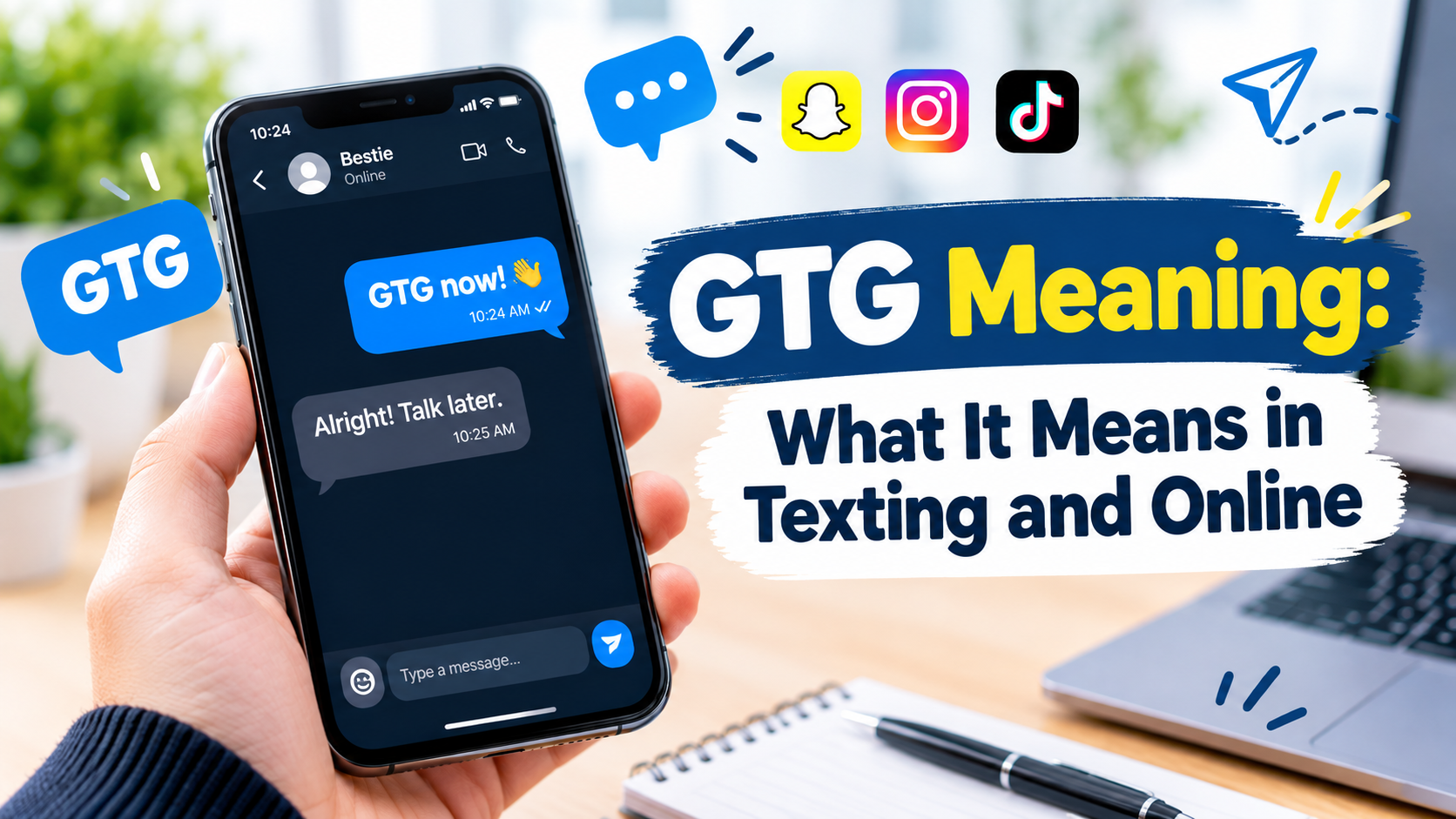
Have you ever seen GTG in a text message, social media comment, or online chat and wondered what it means? GTG Meaning usually stands for “Got to Go” or “Gotta Go.” People use this common texting abbreviation when they need to leave a conversation, stop chatting, or move on to another activity. It is especially popular in casual texting, online conversations, and social media messaging.
The meaning of GTG is simple, but its tone can change depending on the conversation context. For example, someone may write “GTG, talk later” when they are leaving politely. In other cases, “GTG” can simply be a quick way to say they are busy, leaving, or ending the chat. You may also see related phrases such as gotta go, need to leave, talk later, see you later, and signing off.
Understanding internet slang like GTG can make digital communication easier, especially when talking with friends, family, classmates, or online communities. In this guide, we will explain the GTG abbreviation, its common meanings, examples, tone, and how people use it in modern online slang.
Quick Answer
GTG Meaning in American texting most commonly means “got to go” or “gotta go.” It tells someone that you need to leave or end the conversation, while in some contexts it means “good to go.”
TL;DR
- GTG commonly means “got to go” in American texting.
- It can also mean “good to go” when something is ready.
- The abbreviation became popular through fast digital communication.
- GTG usually has a casual, friendly, and practical tone.
- Context determines whether GTG means leaving or being ready.
- Today, it appears in texts, gaming, social media, and group chats.
What Does GTG Mean?
GTG is a shortened form of “got to go.” It’s commonly used when someone wants to tell another person they must leave.
The phrase is especially common in casual digital conversations. Instead of typing a full sentence, someone can simply write “GTG” and communicate the same basic idea.
The Most Common Meaning
When GTG means “got to go,” it usually signals a quick departure.
For example, a person might write:
“GTG, my mom needs me.”
This means the person has to stop chatting because something else requires their attention.
GTG Can Have Two Common Meanings
Although “got to go” is widely recognized, GTG can also mean “good to go.”
| Context | GTG Meaning | What It Signals | Example |
| Texting | Got to go | The person is leaving | “GTG, talk later!” |
| Gaming | Got to go | The player is signing off | “GTG, dinner time.” |
| Planning | Good to go | Something is ready | “Are we GTG?” |
| Work chat | Good to go | Something is approved | “The report is GTG.” |
| Casual conversation | Got to go | The chat is ending | “Sorry, GTG!” |
Because both meanings are possible, the sentence around GTG provides the best clue.
Why Do People Use GTG in Texts?
GTG is useful because it communicates a complete idea with only three letters. Digital conversations often move quickly, so short expressions can save time.
Also, GTG sounds less formal than writing, “I have to leave now.” That makes it suitable for friends, family members, classmates, and online communities.
Speed and Convenience
People often use abbreviations because typing every word can feel unnecessary.
Common reasons include:
- Ending a conversation quickly
- Telling friends they need to leave
- Signing out of an online game
- Saying something is ready
GTG therefore reflects the practical nature of modern digital communication.
A Casual Conversation Marker
GTG can also function as a natural closing signal. It tells the other person that the conversation is temporarily stopping.
However, it doesn’t necessarily mean the person wants to end the relationship or avoid future conversation. Usually, it simply means they have another task or responsibility.
Historical Background of GTG
GTG doesn’t have an ancient symbolic history like an animal, color, or religious object. Instead, its history belongs to the development of modern communication.
The abbreviation grew from the broader culture of shortening phrases in digital messages. Early internet communities, chat rooms, instant messaging services, and mobile texting helped create an environment where compact expressions became normal.
From Spoken Phrase to Abbreviation
“Got to go” existed long before the internet. People naturally used it in everyday speech when they needed to leave.
Digital communication changed the way the phrase was written. As people began communicating through keyboards and phones, the phrase could be reduced to GTG.
The Rise of Digital Shortcuts
Online communication introduced many similar abbreviations.
Examples include:
- BRB for “be right back”
- TTYL for “talk to you later”
- LOL for “laughing out loud”
- BTW for “by the way”
GTG became part of this larger language of digital shortcuts.
What Does GTG Mean in American Culture?
In the United States, GTG is strongly associated with informal communication. You’re more likely to see it between friends than in a formal business letter.
American texting culture often values directness and speed. GTG fits that pattern because it communicates a simple message without unnecessary explanation.
Everyday American Use
A teenager might text:
“GTG, practice starts.”
A friend might say:
“GTG, call you later.”
Someone playing an online game could write:
“GTG everyone, good game!”
In each example, GTG creates a quick transition from conversation to another activity.
A Friendly but Brief Signal
GTG generally doesn’t carry a negative meaning. However, the tone can change depending on what comes before or after it.
For example, “GTG, bye!” may feel friendly and normal. Meanwhile, “GTG.” by itself could feel abrupt if the conversation was emotional or serious.
What Does GTG Mean in Gaming?
Gaming communities frequently use GTG when players need to leave a game or stop playing.
Online games can involve fast conversations through text chat, voice chat, or group messages. Therefore, short abbreviations are convenient.
Common Gaming Situations
Players may use GTG when:
- They need to leave the game.
- Their internet session is ending.
- They have another commitment.
- They’re joining another activity.
For example, “GTG, dinner is ready” clearly means the player needs to leave.
However, gaming can also use GTG as “good to go.” A player might ask, “Are we GTG?” meaning, “Are we ready?”
What Does GTG Mean on Social Media?
On social media, GTG usually carries the same casual meaning found in texting. People may use it in direct messages, comments, group conversations, or private chats.
The abbreviation works particularly well when someone wants to leave without writing a long explanation.
GTG in Group Chats
Group chats can move quickly, especially when several people are talking at once.
Someone might write:
“GTG guys, catch you later.”
That message tells everyone the person is leaving the conversation.
GTG and Casual Online Language
Social media has helped normalize abbreviations across age groups. Younger users may combine GTG with other short expressions, while older users may recognize it from earlier internet and texting culture.
As a result, GTG remains understandable even though digital language continues to change.
What Is the Emotional Meaning of GTG?
GTG doesn’t have one fixed emotional meaning. Instead, its emotional effect depends on the surrounding words, punctuation, and relationship.
Usually, it communicates urgency, departure, or temporary unavailability.
Friendly Emotional Associations
A friendly GTG often suggests that someone simply has something else to do.
For example:
“GTG! This was fun.”
The added sentence makes the emotional meaning clear. The person is leaving, but they’re also showing appreciation.
When GTG Feels Abrupt
A short abbreviation can sometimes feel cold.
For example:
“GTG.”
If someone sends this immediately after a serious message, the receiver might wonder whether the person is avoiding the discussion.
Still, the abbreviation alone doesn’t prove that intention. Context matters more than the letters themselves.
GTG vs. BRB, TTYL, and Goodbye
GTG is related to several other expressions, but each one communicates something slightly different.
GTG vs. BRB
GTG generally means the person needs to leave.
BRB, or “be right back,” suggests the person expects to return soon.
For example:
- “GTG” = I need to leave.
- “BRB” = I’ll be away briefly.
- “TTYL” = I’ll talk to you later.
These differences are small but useful when reading casual messages.
GTG vs. Goodbye
“Goodbye” directly communicates a farewell. GTG focuses more on the reason for leaving.
Therefore, “GTG” can sound less final than “goodbye.”
That distinction helps explain why people often add phrases such as “talk later” or “see you soon.”
What Does GTG Mean in Professional Communication?
GTG can mean “good to go” in some workplace environments. In that context, it doesn’t necessarily mean someone is leaving.
For example:
“The presentation is GTG.”
Here, GTG means the presentation is ready.
When “Good to Go” Makes Sense
This meaning often appears around tasks, projects, schedules, or approvals.
Examples include:
- “The files are GTG.”
- “Everything is GTG for tomorrow.”
- “Are we GTG?”
- “The new version is GTG.”
However, the abbreviation may still feel too casual for formal business communication.
When to Avoid It
In a formal email, spelling out “ready,” “approved,” or “ready to proceed” can be clearer.
The best choice depends on the audience and workplace culture.
Cross-Cultural and Broader Meanings
GTG doesn’t represent a religious symbol or traditional cultural emblem. Its broader significance comes from digital language rather than spiritual tradition.
Still, similar shortened expressions exist across many languages and online communities. People everywhere develop compact ways to communicate departure, readiness, or temporary absence.
A Shared Digital Habit
The important idea is not the letters themselves. Instead, GTG reflects a broader human need to communicate efficiently.
People have always developed shortcuts in speech and writing. Digital communication simply made these shortcuts more visible and widespread.
GTG in Modern Culture
Today, GTG remains useful across texting, gaming, social media, and casual online conversations.
It may appear in lowercase as gtg, uppercase as GTG, or inside longer messages. The capitalization usually doesn’t change the meaning.
Modern Examples
Here are some natural examples:
“gtg, my ride is here.”
“GTG for now. Talk tomorrow.”
“Are we GTG for the meeting?”
“Everything is GTG.”
The first two examples mean “got to go.” The last two can mean “good to go.”
GTG and Digital Identity
Using abbreviations can make messages feel relaxed and conversational. For many people, these expressions are part of their everyday online voice.
However, digital language changes quickly. Some abbreviations become less common, while others remain useful for decades.
Misunderstandings and Common Mistakes
Because GTG has more than one meaning, misunderstandings can happen.
The biggest issue is usually deciding whether it means “got to go” or “good to go.”
How Context Solves the Confusion
Look at the words surrounding GTG.
If someone says:
“GTG, my class is starting.”
They almost certainly mean “got to go.”
But if someone asks:
“Is the project GTG?”
They probably mean “good to go.”
Avoid Assuming a Negative Tone
Another common mistake is assuming GTG means someone is angry or uninterested.
Usually, it doesn’t.
A person may simply be busy, distracted, or required to leave. The emotional meaning should be judged from the entire conversation rather than the abbreviation alone.
How GTG Meaning Has Changed Over Time
The basic meaning of GTG has remained fairly stable. What changed is the range of places where people use it.
Originally, shortened expressions were closely connected with early online communication and texting. Today, they appear across many digital platforms and communities.
From Texting to Everyday Digital Speech
GTG moved beyond simple one-to-one texting. It can now appear in gaming chats, group conversations, social platforms, and workplace messaging.
However, the phrase remains informal in most situations.
Why It Still Works
GTG survives because its meanings are simple and useful.
People still need quick ways to say they’re leaving. They also need short ways to confirm that something is ready. GTG can perform both jobs depending on context.
GTG Meaning in Different Situations
Understanding the situation makes the abbreviation much easier to interpret.
Friends and Family
Among friends, GTG usually means “got to go.” It can be followed by a friendly farewell.
School and College
Students may use GTG when class, practice, work, or another activity is starting.
Gaming
Gamers often use GTG when leaving a session. However, “good to go” is also common when discussing readiness.
Work
In professional chats, GTG may mean “good to go.” Still, formal communication usually benefits from clearer wording.
Social Media
On social platforms, GTG is generally casual and conversational. Its meaning depends on the surrounding message.
Is GTG Still Used Today?
Yes, GTG remains recognizable in modern American digital communication. However, how frequently someone uses it depends on their age, social group, platform, and personal writing style.
Some people prefer newer or simpler phrases such as “gotta go,” “I gotta run,” or “brb.” Others continue using traditional chat abbreviations.
Why Usage Can Vary
Digital slang constantly changes.
People may choose:
- Full phrases instead of abbreviations
- Newer internet expressions
- Platform-specific shorthand
- Voice messages instead of typed messages
Even so, GTG remains easy to understand in many casual settings.
FAQs
What does GTG mean in texting?
GTG most commonly means “got to go” or “gotta go.” It tells someone that you need to leave or stop chatting.
What does GTG mean from a girl?
GTG has the same basic meaning regardless of who sends it. Usually, it means she needs to leave or become unavailable, but the surrounding conversation determines the tone.
What does GTG mean from a guy?
A guy using GTG usually means “got to go.” It doesn’t automatically suggest anger, rejection, or disinterest.
Does GTG mean good to go?
Yes. GTG can mean “good to go” when discussing readiness or approval. For example, “Are we GTG?” can mean “Are we ready?”
Is GTG rude?
GTG is generally not rude. However, sending only “GTG” during a serious conversation can sometimes feel abrupt.
What is the difference between GTG and BRB?
GTG means “got to go,” while BRB means “be right back.” GTG usually signals leaving, whereas BRB suggests a short absence.
Conclusion
GTG Meaning is mainly connected with “got to go” in American texting and online conversations. It provides a quick way to say that someone needs to leave. In other situations, it means “good to go,” especially when discussing readiness.
Overall, GTG is a practical example of how digital communication creates shorter forms of everyday language. Its meaning isn’t mysterious, but context can change how it should be understood. When you see GTG in a message, look at the surrounding words before deciding what the sender means.