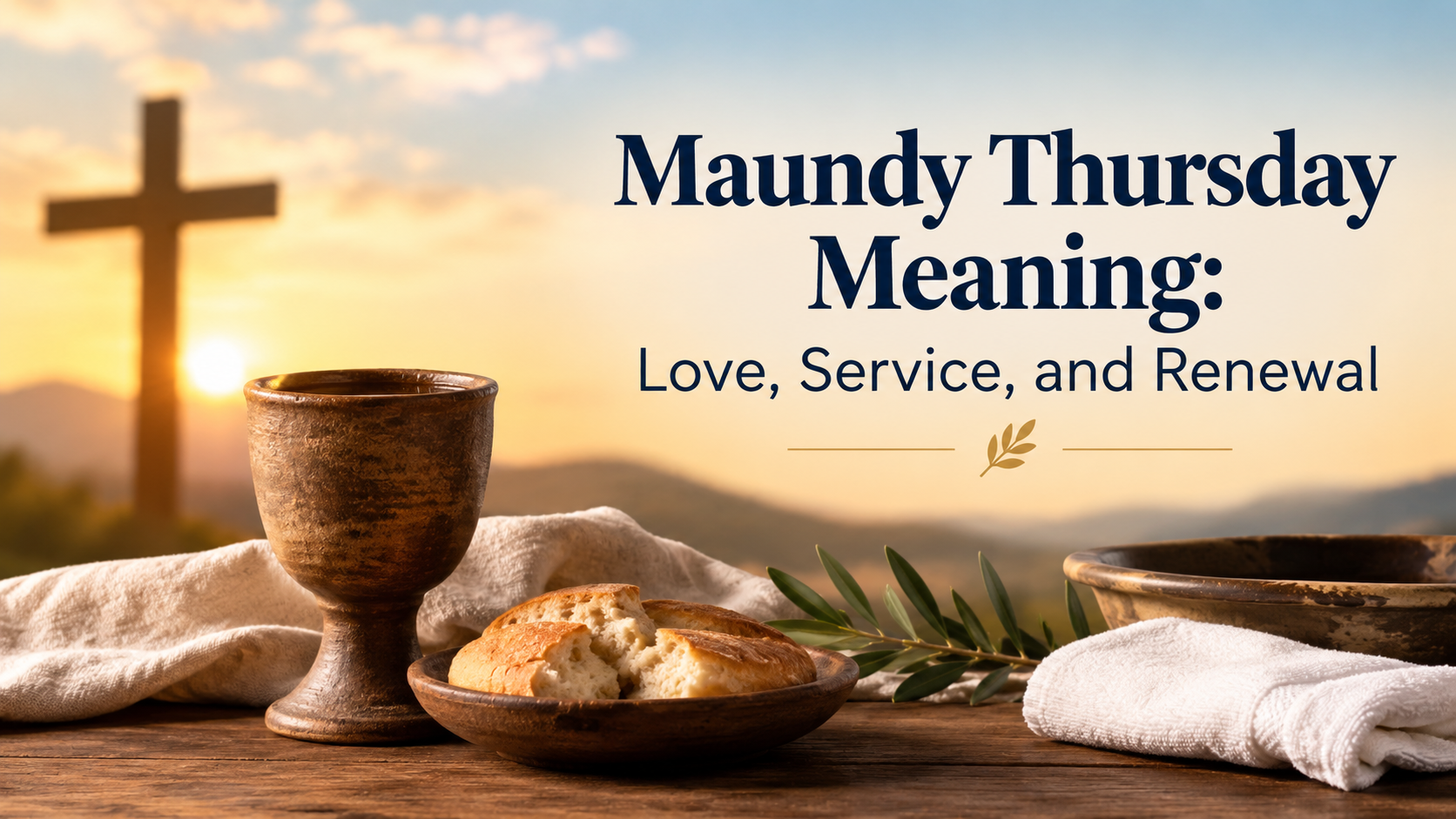
Maundy Thursday Meaning refers to the Christian observance that remembers Jesus Christ’s Last Supper with his disciples before his crucifixion. It is observed during Holy Week, usually on the Thursday before Good Friday. The day carries deep Christian symbolism, especially around love, humility, service, sacrifice, and remembrance.
The word “Maundy” comes from the Latin mandatum, meaning commandment or command. It points to Jesus’ teaching that his followers should love and serve one another. During the Last Supper, Jesus washed his disciples’ feet, creating an important symbol of humility, servanthood, and selfless love. Christians also connect the day with the Eucharist, or Holy Communion, because the Last Supper is central to Christian worship.
In the United States, Maundy Thursday is observed by many Catholic, Protestant, and other Christian communities. Churches may hold evening services, communion, foot-washing ceremonies, prayer gatherings, and quiet reflection. The observance can feel solemn because it leads directly toward the events remembered on Good Friday.
Quick Answer
Maundy Thursday meaning in the USA is mainly associated with Jesus’ Last Supper, humble service, love, and remembrance before Good Friday. More broadly, it symbolizes putting love into action through compassion, humility, forgiveness, and service.
TL;DR
• Maundy Thursday remembers Jesus’ final meal with his disciples.
• The name comes from a Latin word meaning “commandment.”
• Foot washing symbolizes humility and selfless service.
• Communion connects the day with Christian remembrance and fellowship.
• American churches observe the day in many different ways.
• The day leads into Good Friday and Easter.
What Is Maundy Thursday?
Maundy Thursday is a Christian observance during Holy Week, the week leading to Easter. It traditionally falls on the Thursday before Easter Sunday.
Why Is It Called Maundy Thursday?
The name comes from the Latin phrase mandatum novum, meaning “new commandment.” This refers to Jesus’ teaching in the Gospel of John to love one another.
Over time, “mandatum” became associated with the English word “Maundy.” Therefore, the name points toward a central message of the day: love should be practiced through service.
When Does Maundy Thursday Occur?
Its date changes each year because Easter changes dates.
For example:
| Year | Maundy Thursday | Easter Sunday |
| 2025 | April 17, 2025 | April 20, 2025 |
| 2026 | April 2, 2026 | April 5, 2026 |
| 2027 | March 25, 2027 | March 28, 2027 |
This changing date reflects the traditional Christian calendar rather than a fixed annual date.
What Happened on Maundy Thursday?
Maundy Thursday recalls several events traditionally associated with Jesus’ final night before his crucifixion. These events appear especially in the New Testament accounts of the Last Supper and Jesus’ arrest.
The Last Supper
Jesus shared a final meal with his disciples. During this meal, Christians traditionally connect Jesus’ words and actions with the origins of the Eucharist or Holy Communion.
The meal therefore carries several meanings at once. It represents fellowship, remembrance, sacrifice, and a shared religious identity.
Jesus Washes the Disciples’ Feet
The Gospel of John describes Jesus washing his disciples’ feet. In the ancient world, washing feet was associated with hospitality and lowly service.
Jesus’ action reversed expected social roles. Instead of placing himself above others, he took the position of a servant.
Jesus Prays Before His Arrest
The night also includes Jesus’ prayer before his arrest. Christian traditions often connect this moment with sorrow, obedience, vulnerability, and preparation for suffering.
Because of this, Maundy Thursday has a more solemn tone than ordinary worship.
What Does Maundy Thursday Symbolize?
The central symbolism of Maundy Thursday comes from actions rather than a single object. Love, service, humility, fellowship, and sacrifice all appear throughout its traditions.
Love Through Action
The day’s message isn’t simply about feeling love. Instead, it emphasizes showing love through practical behavior.
This distinction remains meaningful for many American Christians. Helping others can become a visible expression of faith and community responsibility.
Humility and Service
Foot washing is perhaps the clearest symbol of humility. It portrays leadership as service rather than superiority.
The symbolism can also extend beyond religious ceremonies. People may connect it with volunteering, caring for others, forgiveness, and acts of kindness.
Remembrance and Fellowship
The Last Supper gives Maundy Thursday a strong connection with remembrance. Communion brings members of a congregation together around shared beliefs and traditions.
As a result, the day can feel both personal and communal.
What Does Maundy Thursday Mean in America?
In the United States, Maundy Thursday has no single national observance. Instead, its meaning depends heavily on denomination, congregation, family tradition, and personal faith.
American Church Traditions
Some American churches treat Maundy Thursday as one of the most important services of Holy Week. Others observe it quietly or don’t hold a special service.
Common practices include:
• Evening worship focused on the Last Supper
• Communion or Eucharistic services
• Foot washing ceremonies
• Scripture readings about Jesus’ final night
• Prayer services with subdued music
• Stripping or darkening the church altar
The variety reflects America’s broad Christian landscape.
A Day of Service
Some communities emphasize the practical side of the observance. Churches may encourage members to serve neighbors, volunteer, visit people in need, or practice forgiveness.
Thus, the symbolism can move from the church building into everyday life.
What Are the Symbols of Maundy Thursday?
Maundy Thursday uses several powerful symbols. Each one helps communicate an aspect of the day’s story.
Bread and Wine
Bread and wine are strongly associated with the Last Supper and Christian communion. Their meaning differs somewhat between Christian traditions.
However, they commonly represent remembrance, fellowship, and Jesus’ sacrifice.
Basin and Towel
A basin and towel directly recall the foot-washing story. They represent humility and service.
Because the objects are simple, their symbolism can feel especially powerful. Ordinary household items become reminders of a major spiritual teaching.
The Cross
The cross becomes increasingly important as Holy Week moves toward Good Friday. On Maundy Thursday, it points toward the suffering that follows Jesus’ final meal.
Darkness and Silence
Some churches reduce lighting, remove decorations, or use periods of silence. These choices create a sense of transition from fellowship toward mourning.
Why Is Foot Washing Important on Maundy Thursday?
Foot washing is one of the strongest symbols connected with the observance. It turns an abstract teaching about humility into a physical action.
A Symbol of Humble Leadership
In the Gospel story, Jesus washes the feet of his disciples. The action presents service as a form of leadership.
For many Christians, this challenges ideas about status and power. A respected person can demonstrate greatness by serving others.
Different Practices in American Churches
Foot washing isn’t practiced in every American church. Where it does occur, the ceremony can vary considerably.
Some congregations wash one another’s feet. Others invite selected participants to take part. Some use symbolic demonstrations rather than actual foot washing.
Therefore, the practice shouldn’t be assumed to represent every Christian community.
What Is the Spiritual Meaning of Maundy Thursday?
The spiritual meaning of Maundy Thursday often centers on love, humility, sacrifice, and preparation.
Love and the New Commandment
The “Maundy” name points toward Jesus’ command to love others. This gives the observance an ethical dimension.
Love becomes something demonstrated through patience, generosity, forgiveness, and service.
Preparing for Easter
Maundy Thursday also marks a turning point. The joyful celebration of Easter is still ahead, but the story has entered a darker stage.
Because of this, the day invites reflection before celebration.
A Time for Self-Reflection
Some Christians use the evening to consider their relationships and behavior. They may reflect on forgiveness, pride, service, and compassion.
The focus isn’t simply on remembering the past. Instead, it can encourage personal change in the present.
What Colors Represent Maundy Thursday?
Color symbolism varies among Christian traditions and church calendars. Therefore, there isn’t one universal Maundy Thursday color.
White and Gold
Some traditions use white or gold because the day celebrates the Last Supper and Eucharist. These colors can suggest celebration, holiness, and light.
However, the mood may become more subdued as the service progresses.
Red and Other Liturgical Colors
Certain Christian traditions use red during particular Holy Week observances. Others may use white, purple, or no prominent color.
Consequently, color alone can’t determine whether a church is observing Maundy Thursday.
The Absence of Color
Some churches remove decorations after the Maundy Thursday service. This creates a visual movement toward the solemnity of Good Friday.
The change itself becomes part of the symbolism.
How Is Maundy Thursday Celebrated Today?
Modern observances range from elaborate services to quiet personal reflection. In the USA, local church customs often determine the experience.
Church Services
A Maundy Thursday service may include Scripture, prayer, music, communion, and a sermon. Some services are held in the evening because the Last Supper is traditionally remembered as an evening meal.
Foot Washing and Communion
Some congregations include foot washing as a central ritual. Others focus more heavily on communion.
Either way, these practices connect worshippers with the major themes of the day.
Quiet Reflection
Not everyone observes the day through a formal ceremony. Some people read Scripture, pray privately, or reflect on the events of Holy Week.
This makes the observance adaptable to different personal circumstances.
How Does Maundy Thursday Differ From Good Friday?
Maundy Thursday and Good Friday are closely connected, but they focus on different parts of Holy Week.
Maundy Thursday
Maundy Thursday focuses on Jesus’ final meal, his command to love, foot washing, prayer, and the beginning of his final suffering.
Good Friday
Good Friday focuses primarily on Jesus’ crucifixion and death. Its tone is generally more solemn and mournful.
Together, the two days create a progression from fellowship and service toward sacrifice and mourning.
Why the Difference Matters
Understanding this distinction makes Holy Week easier to follow. Maundy Thursday emphasizes what happened before the crucifixion.
Good Friday then focuses directly on the crucifixion itself.
Maundy Thursday Across Christian Traditions
Christian communities share many core themes, but they don’t all observe the day identically.
Catholic Traditions
Catholic communities commonly celebrate the Mass of the Lord’s Supper. Foot washing may also form part of the liturgy.
The service often emphasizes the Eucharist, Christian unity, and service.
Orthodox Traditions
Eastern Orthodox Christians observe Holy Thursday with distinctive liturgical traditions. Their Holy Week calendar and worship practices can differ from Western customs.
The Last Supper remains central to the day’s meaning.
Protestant Traditions
Protestant churches vary widely. Some hold detailed Maundy Thursday services, while others combine Holy Week observances.
Therefore, local practice matters when interpreting what the day means to an individual congregation.
What Does Maundy Thursday Mean Emotionally?
Maundy Thursday can create a complex emotional experience. The day begins with fellowship but moves toward sorrow and uncertainty.
Common Emotional Associations
People may connect the observance with:
• Gratitude for relationships and community
• Humility in serving other people
• Sadness about Jesus’ approaching suffering
• Reflection on forgiveness and personal choices
• Comfort through familiar religious traditions
These emotions can coexist rather than appearing separately.
Why the Day Can Feel Heavy
The story contains betrayal, fear, separation, and impending death. Yet it also contains friendship, prayer, service, and love.
That contrast gives the observance much of its emotional depth.
Maundy Thursday in Modern American Culture
Maundy Thursday remains primarily a religious observance. Still, its themes can appear in broader American conversations about service and compassion.
Social Media and Digital Communities
Churches may share prayers, Scripture readings, artwork, or service announcements online. Short videos can also explain foot washing and other Holy Week practices.
However, online posts often simplify complex traditions. Context can help prevent misunderstandings.
Home and Family Observance
Some families mark the evening with a special meal or devotional reading. Others simply attend church together.
These smaller traditions can become meaningful family memories over time.
Tattoos and Personal Symbolism
Christian symbols connected with Holy Week can appear in tattoos. Common examples include crosses, bread, cups, towels, or symbolic phrases.
A tattoo inspired by Maundy Thursday may represent faith, humility, service, or remembrance. Its personal meaning depends on the person wearing it.
Are There Misunderstandings About Maundy Thursday?
Yes. Some misunderstandings arise because the observance isn’t familiar to everyone.
“Maundy” Doesn’t Mean “Mourning”
The word “Maundy” isn’t simply another word for sadness. It comes from the Latin tradition surrounding the “new commandment” to love one another.
The solemn mood comes from the events of Holy Week, not from the word itself.
It Isn’t the Same as Easter
Maundy Thursday occurs during Holy Week but isn’t Easter Sunday. It prepares for the events that lead to Easter.
Therefore, its themes are more focused on service, remembrance, and approaching sacrifice.
Not Every Christian Observes It the Same Way
Christianity contains many denominations and worship traditions. Some strongly emphasize Maundy Thursday, while others give it less attention.
Neither approach should automatically be treated as representative of all Christians.
How Has Maundy Thursday Changed Over Time?
The observance developed within the Christian liturgical calendar over many centuries. Its central stories remained stable, while ceremonies and emphasis changed.
Early Christian Roots
The roots of Maundy Thursday are found in early Christian remembrance of Jesus’ final days. Over time, Holy Week developed into a structured period of worship and reflection.
The exact ceremonies weren’t identical everywhere.
Medieval Developments
In medieval Europe, foot washing became an established Christian ritual in various settings. Religious leaders could use the ceremony to demonstrate humility and service.
The practice later continued in different forms.
Modern American Observance
Today, American churches combine inherited traditions with local customs. Some services are formal and highly liturgical, while others are simple and contemporary.
Despite these differences, the themes of love and service remain recognizable.
What Does Maundy Thursday Teach About Service?
The strongest practical message is that service can be an expression of love. The foot-washing story gives that idea a memorable physical form.
Service Without Status
The symbolism challenges the idea that important people should remain above ordinary tasks. Instead, it presents humility as a valuable quality.
For modern readers, this can connect with volunteering, caregiving, hospitality, and community work.
Service as a Daily Practice
Maundy Thursday doesn’t have to remain a once-a-year idea. Its message can influence ordinary actions throughout the year.
A small act of help can carry the same broader theme of care and humility.
FAQs
Why is Maundy Thursday called Maundy Thursday?
The name comes from the Latin mandatum, meaning “commandment.” It refers to Jesus’ command that his followers love one another.
What does Maundy Thursday symbolize?
It commonly symbolizes love, humble service, remembrance, fellowship, and sacrifice. It also marks the beginning of the final events leading to Easter.
What happened on Maundy Thursday?
Christians traditionally remember the Last Supper, Jesus washing his disciples’ feet, his prayer, and his arrest. These events are especially associated with the Gospel accounts of Jesus’ final night.
Do Christians have to celebrate Maundy Thursday?
There isn’t one universal Christian practice requiring everyone to observe it in the same way. Different denominations and congregations have different traditions.
What color is associated with Maundy Thursday?
There isn’t one universal color across Christianity. White, gold, purple, and other choices may appear depending on the church tradition.
Is Maundy Thursday a sad day?
It can be both reflective and solemn. The day begins with themes of fellowship and service but leads toward the suffering remembered on Good Friday.
Conclusion
The heart of Maundy Thursday meaning is love expressed through humility and service. Its stories connect the Last Supper, foot washing, prayer, fellowship, and the approach of Jesus’ crucifixion.
In the United States, churches observe the day in many different ways. Some focus on communion, while others emphasize foot washing, prayer, or quiet reflection. Yet the central themes remain remarkably consistent.