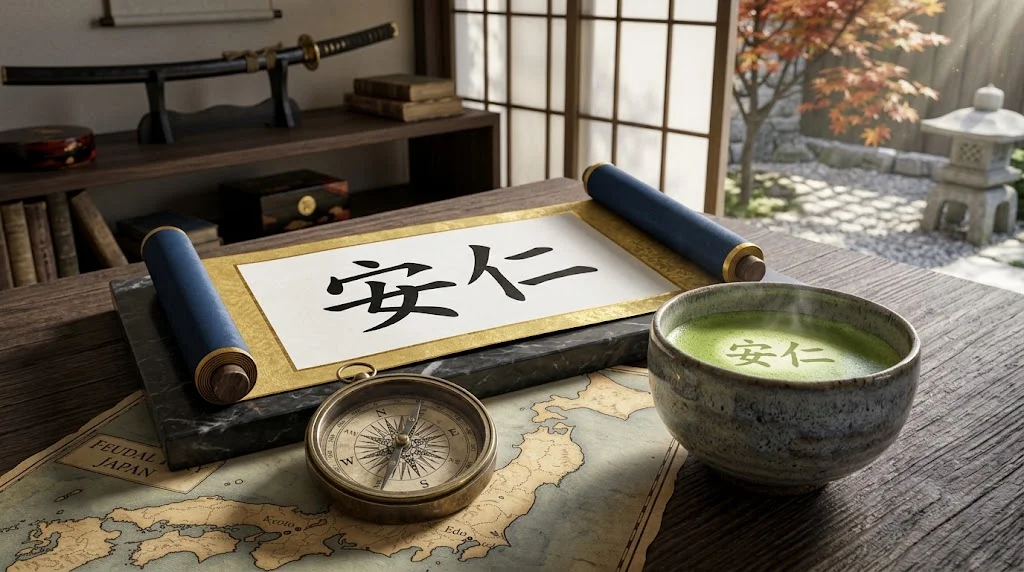
The word Anjin has a fascinating history that connects language, culture, travel, and historical identity. If you have encountered the term Anjin meaning, you may be wondering what it means, where it comes from, and why it still appears in modern discussions. The term is especially associated with Japanese history, where it became connected with a foreign navigator who arrived in Japan during the early 17th century.
Understanding the meaning of Anjin requires looking beyond a simple dictionary definition. The word can refer to a navigator, pilot, or foreign sailor, depending on its historical context. Its importance grew through the story of William Adams, an English navigator who became known in Japan as Anjin Miura. His experiences helped create a lasting connection between the term and Japanese culture, foreign travelers, and cross-cultural exchange.
Today, Anjin can have both historical significance and symbolic meaning. It may represent navigation, exploration, adventure, cultural exchange, or the meeting of different worlds. In modern use, the term can also appear in Japanese literature, historical discussions, entertainment, and names inspired by Japanese history. Exploring its origin, history, and symbolism provides a clearer understanding of why this unusual word remains memorable.
Quick Answer
Anjin meaning is traditionally associated with a navigator or pilot, especially through the historical figure Miura Anjin in Japan. Symbolically, it can represent guidance, navigation, trust, exploration, and finding a safe direction.
TL;DR
- Anjin is strongly associated with navigation in Japanese history.
- Miura Anjin was the Japanese name of William Adams.
- The term is linked with steering ships and finding safe routes.
- Its symbolism includes guidance, skill, exploration, and direction.
- In modern contexts, Anjin can suggest leadership and personal journeys.
What Does Anjin Mean?
Anjin is best understood through its Japanese historical use. The term is associated with a navigator, pilot, or person skilled in guiding a vessel.
The word became especially notable because of William Adams. After arriving in Japan in 1600, Adams became known as Miura Anjin and served Tokugawa Ieyasu.
A Word Connected With Navigation
Navigation requires more than knowing where a ship should go. A navigator must understand winds, waters, instruments, maps, and changing conditions.
Because of that role, Anjin naturally carries symbolic ideas such as:
- Finding direction when the destination isn’t obvious
- Guiding others through unfamiliar conditions
- Combining knowledge with practical judgment
- Protecting a journey from unnecessary danger
- Staying calm while circumstances change
This makes the word interesting beyond its historical definition.
Why the Meaning Matters
Words connected with navigation often develop powerful symbolic meanings. People commonly compare life itself to a journey.
In that sense, a navigator becomes a useful image for someone who helps others find their way.
Read More:Jewel vs. Joule: Meaning, Spelling, and the Difference Explained
The Historical Origins of Anjin
The history of Anjin is strongly connected with Japan’s early modern period. Its best-known story begins with William Adams, an English sailor who reached Japan in 1600.
Adams had experience as a navigator and ship pilot. His arrival became an important part of his later relationship with Tokugawa Ieyasu.
William Adams and Miura Anjin
William Adams was born in England around 1564. He eventually joined a Dutch expedition that traveled toward Asia.
After reaching Japan, Adams became involved with Tokugawa Ieyasu. Over time, he gained a position of unusual importance for a foreigner living in Japan.
Adams received a Japanese name, Miura Anjin. The name connected him with his maritime profession.
The historical association is important because it helped preserve Anjin as a recognizable term in Japanese history.
A Name With a Maritime Identity
The story of Miura Anjin shows how a person’s profession could become part of their identity.
For Adams, navigation wasn’t simply a job. It became closely connected with how he was known in Japan.
That connection gives Anjin an unusual historical character. It represents both a profession and a remarkable cultural encounter.
What Does Anjin Symbolize?
Anjin has several symbolic meanings because navigation itself is rich with metaphor. A navigator knows that a journey rarely follows a perfectly straight line.
For that reason, Anjin can symbolize direction, guidance, exploration, and practical wisdom.
Direction and Purpose
A ship needs a course. Without direction, even a strong vessel can drift away from its destination.
Anjin can therefore represent the importance of knowing where you’re going.
In personal symbolism, this may relate to someone searching for purpose or making an important life decision.
Guidance and Leadership
A navigator doesn’t necessarily own the ship. Instead, their knowledge helps the vessel travel safely.
That makes Anjin a useful symbol of quiet leadership.
The idea suggests that leadership doesn’t always mean commanding others. Sometimes it means understanding the situation and helping people choose a safe course.
Exploration
Navigation is also connected with discovery. Sailors historically crossed unfamiliar waters to reach distant places.
Consequently, Anjin can symbolize curiosity and willingness to explore the unknown.
Anjin Symbolism in America
Anjin isn’t a common everyday American word. However, its symbolism can still make sense within American culture.
The United States has a strong cultural tradition of exploration, migration, travel, and self-direction. Because of this, navigation imagery often feels familiar to American audiences.
The American Idea of Finding Your Way
American culture frequently celebrates people who create their own paths. Stories about pioneers, travelers, entrepreneurs, sailors, and explorers all use similar ideas.
Anjin fits naturally into that broader symbolic pattern.
For an American audience, it may suggest:
- Independence during difficult journeys
- Confidence when entering unfamiliar territory
- Leadership without unnecessary control
- Learning from changing circumstances
- Determination to reach a meaningful destination
Navigation as a Life Metaphor
American English often describes personal decisions using travel language. People talk about finding direction, changing course, reaching goals, or being lost.
Anjin fits this metaphor particularly well.
The word can therefore be interpreted as an image of someone who helps turn uncertainty into movement.
Anjin and the Symbolism of the Compass
Although Anjin isn’t itself a compass, its connection with navigation makes compass imagery especially relevant.
A compass represents orientation. It doesn’t move the traveler toward a destination by itself. Instead, it provides information about direction.
Why Compass Imagery Fits
The relationship between Anjin and compass symbolism is mainly metaphorical.
Both ideas can represent:
- Direction during uncertain moments
- A reliable point of reference
- Decision-making and orientation
- Travel toward a chosen destination
- Confidence in unfamiliar surroundings
For this reason, someone using Anjin as a symbolic name might pair it with nautical or compass imagery.
Anjin in Japanese History and Culture
The strongest cultural association of Anjin comes from the story of William Adams.
His life is significant because it represents an unusual meeting between England and Japan during a period when international relationships were developing in complex ways.
Miura Anjin’s Historical Legacy
William Adams spent the rest of his life in Japan. He became involved in maritime matters and developed relationships within the Tokugawa government.
His story has remained popular because it combines travel, cultural exchange, politics, and personal adaptation.
Anjin consequently carries a historical association with cross-cultural navigation.
From Occupation to Historical Symbol
At first, the word’s importance was practical. It identified a person’s maritime expertise.
Over time, however, the story of Miura Anjin gave the term a broader historical identity.
Today, people encountering the word may think not only about sailing, but also about Adams’ unusual journey between two cultures.
Spiritual and Cross-Cultural Meanings
Anjin does not have one universal spiritual meaning. Its symbolism should therefore be separated from specific religious teachings.
Still, navigation has meaningful parallels across many cultures.
The Journey as a Spiritual Image
Many traditions use journeys as metaphors for personal growth. A person may travel from confusion toward understanding or from hardship toward renewal.
Anjin can fit this broad symbolic pattern without requiring a particular religious interpretation.
Guidance and Inner Direction
In spiritual or reflective contexts, navigation may represent finding one’s inner direction.
A compass can symbolize principles. A journey can symbolize growth. A guide can symbolize wisdom.
These interpretations are modern symbolic associations rather than a single fixed religious doctrine attached to Anjin.
Emotional and Psychological Meaning of Anjin
Words connected with navigation can create strong emotional associations. They often suggest stability during uncertain circumstances.
Anjin may therefore appeal to people who value calm judgment and direction.
Feelings Associated With the Word
The strongest emotional associations include:
- Confidence when facing unfamiliar situations
- Calmness during periods of uncertainty
- Curiosity about distant places and experiences
- Trust in knowledge and careful judgment
- Resilience when a journey becomes difficult
These associations come largely from the navigator’s role.
The Psychology of Finding Direction
People naturally seek a sense of direction in their lives. Uncertainty can feel uncomfortable, while having a clear path can create confidence.
That makes navigation a powerful psychological metaphor.
Anjin can symbolically represent the person who doesn’t need perfect conditions to keep moving forward.
Anjin as a Name or Personal Symbol
Because Anjin has a distinctive historical background, some people may encounter it as a name, character reference, or symbolic term.
Its unusual sound can also make it memorable.
What the Name Can Suggest
When used symbolically, Anjin may communicate qualities such as:
- Explorer
- Navigator
- Guide
- Traveler
- Strategic thinker
- Steady leader
However, these are symbolic interpretations. They don’t mean every person called Anjin has these qualities.
Why Historical Names Feel Powerful
Historical names often carry stories. A name connected with a real person can give an abstract idea a human identity.
In Anjin’s case, the story of Miura Anjin adds depth to the basic idea of navigation.
Anjin in Tattoos, Art, and Decor
Anjin can work well in visual symbolism because navigation has many recognizable images.
Compass designs, ships, maps, stars, waves, and navigation tools can all support the concept.
Tattoo Symbolism
Someone choosing Anjin-inspired tattoo imagery might use it to represent a personal journey.
Possible themes include:
- A compass representing personal direction
- A ship representing an important life journey
- Waves representing changing circumstances
- Stars representing guidance from a distance
- A map representing exploration and discovery
The meaning ultimately depends on the person who chooses the design.
Home Decor and Art
Nautical decor has long used maps, compasses, ships, and maritime instruments.
An Anjin-inspired piece could therefore emphasize travel, exploration, history, or cultural connection.
A historically informed design should avoid treating Japanese culture as merely decorative. Context makes the symbolism more meaningful.
Anjin in Literature and Popular Culture
The story of Miura Anjin has attracted attention far beyond historical records.
His life has inspired books, television adaptations, and fictional retellings. These works have introduced the historical figure to audiences who might otherwise never encounter his story.
Fiction and Historical Memory
Popular culture often reshapes historical figures. A real person can become a larger-than-life character through dramatic storytelling.
That means fictional versions of Anjin-related stories shouldn’t always be treated as exact history.
Instead, they can be understood as interpretations of a remarkable historical encounter.
Why the Story Still Connects
The basic themes remain familiar today:
A traveler enters an unfamiliar world, learns a new culture, and builds a new life.
That story continues to appeal because it involves adaptation, courage, identity, and discovery.
Anjin Meaning Across Different Contexts
Anjin doesn’t have exactly the same meaning in every setting. Context can change what readers notice first.
| Context | Meaning in the USA | Common Association | Important Note |
| Japanese history | Navigator or maritime figure | Miura Anjin | Strong historical connection |
| Personal symbolism | Finding direction | Compass or journey | Usually metaphorical |
| Travel imagery | Exploration and guidance | Ships and maps | Broad symbolic use |
| Tattoos | Life journey | Compass, waves, stars | Personal meaning varies |
| Literature | Cross-cultural journey | William Adams | Fiction may dramatize history |
| Leadership | Guiding others | Navigation and judgment | Symbolic rather than literal |
This range explains why Anjin can feel meaningful even outside historical discussions.
Common Misunderstandings About Anjin
Because Anjin isn’t widely known in everyday American English, confusion is understandable.
Some readers may assume it has one universal definition. However, its meaning depends heavily on its historical and linguistic context.
Anjin Isn’t a Universal Symbol
Anjin shouldn’t automatically be treated as an ancient spiritual symbol.
Its strongest documented association is with navigation and the historical use connected with Miura Anjin.
Broader meanings such as inner guidance or personal growth are modern symbolic interpretations.
Historical and Fictional Versions Can Differ
Stories about William Adams have been adapted for entertainment. Dramatic versions may add details, simplify events, or reshape personalities.
Therefore, historical Anjin and fictional representations should be kept distinct.
How the Meaning of Anjin Has Changed
The meaning associated with Anjin has developed through different layers of history.
Its maritime association came first. Later, the personal story of William Adams gave it a much stronger historical identity.
From Navigation to Metaphor
A practical maritime role can become a metaphor over time.
Today, navigation often represents much more than sailing. It can describe personal choices, leadership, identity, and emotional growth.
That shift allows Anjin to be interpreted in ways that weren’t necessarily part of its original occupational use.
What Remains Consistent
Despite these changes, one central idea remains.
Anjin is connected with helping a journey stay on course.
That simple concept explains much of its continuing symbolic appeal.
Why Anjin Still Matters Today
Anjin may be unfamiliar to many American readers, but its underlying ideas are easy to understand.
People still face situations where they need direction. They still travel into unfamiliar places, adapt to new cultures, and make decisions without knowing exactly what comes next.
A Modern Symbol of Direction
In today’s world, Anjin can represent the ability to move forward without having every answer.
It can suggest thoughtful leadership rather than forceful control.
It can also represent cultural curiosity and the willingness to learn from unfamiliar experiences.
A Symbol for Personal Journeys
Many people see their lives as journeys. Careers change, relationships evolve, and personal goals develop.
Anjin fits that perspective because the navigator’s job is not to eliminate uncertainty. It’s to respond intelligently to it.
Conclusion
The meaning of Anjin is closely connected to Japanese history and the idea of navigation and cross-cultural contact. Historically, the term became strongly associated with William Adams, whose role as a navigator helped give Anjin lasting cultural significance. Today, the word can evoke ideas of exploration, travel, navigation, cultural exchange, and historical connection. Understanding its background makes it more than just an unfamiliar Japanese term—it becomes a window into an important period of interaction between Japan and the Western world.
FAQS
What does Anjin mean?
Anjin is a Japanese term historically associated with a navigator or pilot. It became particularly famous through William Adams, an English navigator who lived in Japan.
What is the history of Anjin?
The term became historically significant in Japan during the early 17th century through William Adams, who was known as Anjin Miura after settling in Japan.
Who was Anjin Miura?
Anjin Miura was the Japanese name associated with William Adams, an English navigator who arrived in Japan in 1600 and later served the Tokugawa shogunate.
What does Anjin symbolize?
Depending on context, Anjin can symbolize navigation, exploration, travel, cultural exchange, and connections between different cultures.
Is Anjin a Japanese word?
Yes. Anjin (按針) is a Japanese term associated historically with a navigator or pilot.
Why is Anjin associated with William Adams?
William Adams was a navigator, and he became known as Miura Anjin in Japan. His historical role made the term particularly associated with him.
Is Anjin still used today?
The historical term is not an everyday word for most modern Japanese speakers, but Anjin continues to appear in historical references, cultural works, place names, and discussions about William Adams.
What is Anjin Miura known for?
Anjin Miura is known for William Adams’s role in Japanese history and his relationship with the Tokugawa shogunate during the early 1600s.