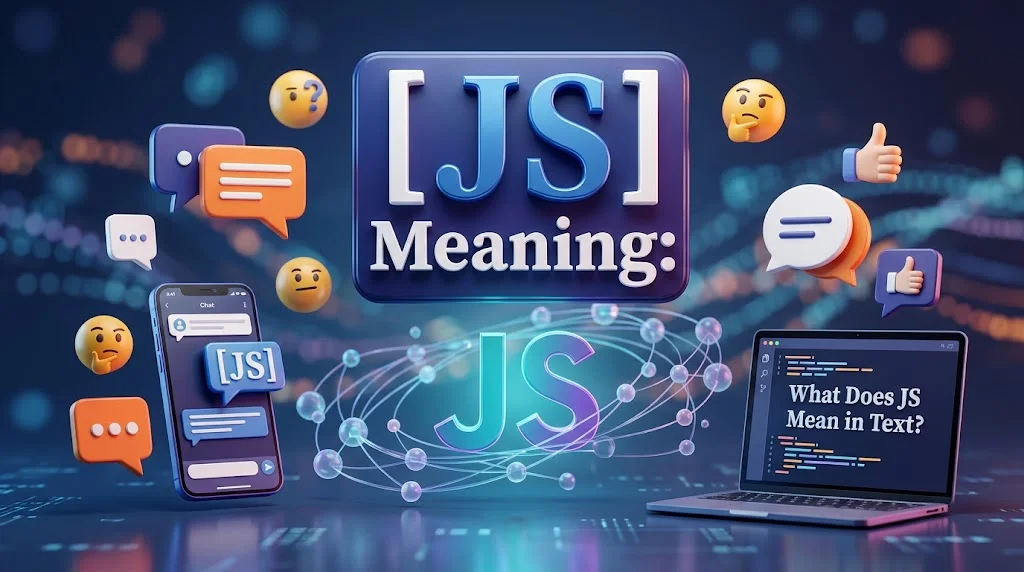
JS meaning usually refers to JavaScript, a popular programming language used to make websites interactive and dynamic. If you see JS in a text message, social media post, online chat, or technical conversation, its meaning can depend on the context. In web development, JS almost always means JavaScript, while in casual communication, it may have other interpretations.
JavaScript works alongside HTML and CSS to create modern web pages, web applications, and interactive features. Developers use JS code for things such as buttons, forms, animations, menus, pop-ups, and other interactive elements. It can run in a web browser and can also be used on the server side through technologies such as Node.js.
Understanding JS abbreviation, JS acronym, and JS definition is helpful if you’re learning coding, programming, or web development. Whether you encountered JS in a website, GitHub project, coding tutorial, or conversation, knowing the surrounding context can help you understand exactly what someone means. In this guide, we’ll explain what JS means, its common uses, examples, and related meanings in simple language.
Quick Answer
In American texting, JS Meaning usually stands for “just saying.” It tells the reader that someone is sharing an opinion or observation without making a formal demand.
In technology, however, JS commonly means JavaScript, so context determines the correct meaning.
TL;DR
- JS usually means “just saying” in casual texts and online chats.
- People use it to share opinions without sounding overly serious.
- JS can sometimes sound friendly, teasing, blunt, or sarcastic.
- In programming, JS commonly means JavaScript.
- The sentence and conversation usually reveal the intended meaning.
Read More:LWK Meaning: What Does LWK Mean in Text?
What Does JS Mean in Text?
JS most commonly means “just saying” when it appears in casual messages. People use it after making a statement they want to present casually.
For example, someone might text, “You should leave earlier next time, js.” Here, the sender is offering an opinion rather than giving a strict command.
Common Meaning
The phrase “just saying” can have several similar meanings:
• I’m only sharing my opinion.
• I’m simply pointing something out.
• That’s just how I see it.
• Take my comment however you want.
• I’m not necessarily trying to argue.
The exact feeling depends on the sentence. A friendly comment can make JS sound harmless and playful.
However, a critical comment can make it sound defensive or sarcastic. Therefore, you shouldn’t judge the tone from “JS” alone.
What Is the Full Form of JS?
In casual texting, the most common full form of JS is “just saying.” It is an informal abbreviation used in digital conversations.
The phrase can appear at the end of a sentence. It can also appear naturally within a longer casual message.
JS as “Just Saying”
Consider this example:
“That movie was pretty boring, js.”
The sender means, “That movie was pretty boring, just saying.”
Another example is:
“You could ask her directly, js.”
Here, the person is giving advice while keeping the statement casual.
JS Can Mean Different Things
JS doesn’t have one universal definition. Its meaning changes according to the setting.
| Context | Meaning | Typical Use |
| Casual texting | Just saying | Opinions and comments |
| Social media | Just saying | Casual reactions |
| Programming | JavaScript | Coding and web development |
| Personal context | Initials | Names or usernames |
| Specialized settings | Context-dependent | Organizations or technical terms |
Because of this, reading the entire message is usually more useful than looking at two letters alone.
Why Do People Use JS in Text Messages?
People use JS because online communication is often quick and informal. Short abbreviations save typing and can also influence the tone of a message.
Saving Time
Writing “just saying” takes more characters than writing JS. In fast conversations, small shortcuts can make messaging easier.
For example:
“Your idea might work better this way, js.”
The sender can express the same thought without writing the complete phrase.
Making Comments Feel Casual
JS can make a statement feel less formal. It often signals that the writer isn’t presenting an opinion as an absolute fact.
That doesn’t always make the statement nicer, though. The surrounding words still control the overall tone.
Adding a Conversational Feeling
Text messages don’t include facial expressions or vocal tone. Therefore, abbreviations sometimes help communicate how a message is intended.
JS can suggest that the writer is simply making a casual observation.
How Is JS Used on Social Media?
JS can appear in comments, direct messages, captions, group conversations, and other casual online spaces. Its meaning generally remains “just saying” when the surrounding conversation is informal.
In Comments
Someone might comment:
“That outfit looks better in black, js.”
The person is expressing a preference. They aren’t necessarily criticizing the person wearing it.
Another example could be:
“I think the first version was better, js.”
Again, the writer is simply offering an opinion.
In Direct Messages
Friends may use JS when discussing plans, relationships, entertainment, school, work, or everyday situations.
For example:
“You should probably text him first, js.”
The phrase makes the suggestion sound more conversational.
On Short-Form Platforms
Short abbreviations work especially well in fast-moving online conversations. Users often prefer compact expressions because they can communicate an idea quickly.
However, not everyone uses abbreviations in exactly the same way. Age, social group, platform, and personal habits can affect usage.
What Tone Does JS Have?
JS doesn’t have one fixed emotional tone. Instead, it can sound different depending on what comes before it.
Friendly Tone
A friend might say:
“You look great in that jacket, js.”
Here, JS feels light and supportive.
Teasing Tone
Someone could also use it jokingly:
“You really do talk a lot, js.”
The sender may be teasing rather than seriously criticizing.
Sarcastic Tone
In another conversation, JS can sound sarcastic:
“You might want to read the instructions next time, js.”
The abbreviation doesn’t automatically make the statement friendly. The rest of the message matters more.
Defensive Tone
Sometimes people add “just saying” after a controversial opinion. In that situation, JS can sound like a way to protect the speaker from disagreement.
The message may essentially mean, “I’m expressing my opinion, but you don’t have to agree.”
Is JS the Same as “Just Saying”?
Yes, in casual texting, JS commonly represents “just saying.” The abbreviation simply removes the longer words.
However, the meaning isn’t always identical in tone.
“Just Saying” Versus “JS”
“Just saying” can sound more natural in ordinary conversation. JS feels shorter and more internet-based.
Compare these:
“I think you should leave earlier, just saying.”
and:
“I think you should leave earlier, js.”
Both communicate a similar idea. However, the second version feels more casual and abbreviated.
Why Context Still Matters
A person may use JS differently from another person. Some people use it to soften criticism, while others use it simply as a quick conversational ending.
Therefore, don’t assume someone is angry just because they wrote JS.
Does JS Mean “Just” in Texting?
Sometimes, yes. Some people use lowercase js as a shortened form of the word “just.”
For example:
“I js wanted to ask something.”
Here, js means “just,” not “just saying.”
How to Tell the Difference
Look at where JS appears in the sentence.
If it appears at the end, it may mean “just saying.”
“That restaurant is expensive, js.”
If it appears before another verb or phrase, it may mean “just.”
“I js wanted to check.”
This use is more dependent on personal texting habits. Therefore, context becomes especially important.
What Does JS Mean in Programming?
In technology, JS usually means JavaScript. This is completely different from the texting expression “just saying.”
JavaScript is a programming language widely used to add interactive behavior to websites and applications.
How Programmers Use JS
A developer might write:
“The JS isn’t loading.”
Here, JS clearly refers to JavaScript.
Someone could also say:
“I’m learning JS.”
In a programming conversation, interpreting JS as “just saying” would make little sense.
Why Context Solves the Confusion
Compare these two messages:
“That game is overrated, js.”
This probably means “just saying.”
Now compare:
“I’m debugging some JS.”
This almost certainly means JavaScript.
The surrounding vocabulary makes the intended meaning clear.
What Does JS Symbolize in Modern Digital Communication?
Although JS isn’t a traditional symbol like a color or religious image, abbreviations can still carry social meaning.
In digital communication, JS often represents casualness, speed, informality, and personal opinion.
A Symbol of Casual Communication
Short forms developed partly because digital conversations favor speed. JS lets people communicate an idea without writing a longer phrase.
It can therefore signal an informal relationship between the people communicating.
A Marker of Personal Opinion
When JS means “just saying,” it often frames a statement as personal.
The speaker isn’t necessarily claiming that everyone should agree. Instead, they’re presenting their own observation.
A Sign of Digital Language
Abbreviations like JS show how language changes with technology. People continually create shorter forms for common expressions.
These forms can spread through texting, online communities, social platforms, and everyday conversation.
What Does JS Mean Emotionally?
JS can affect how a message feels, even though it contains only two letters.
The emotional effect comes from the phrase “just saying” and the statement surrounding it.
Common Emotional Associations
People may interpret JS as:
• Casual and relaxed communication.
• A softer way to express criticism.
• A simple personal observation.
• Playful teasing between friends.
• A slightly defensive comment.
• An attempt to avoid unnecessary conflict.
However, these interpretations aren’t universal. The same abbreviation can feel friendly to one reader and sarcastic to another.
Why Tone Can Be Confusing
Text messages don’t provide facial expressions or voice inflection. As a result, readers sometimes assign their own emotions to short messages.
For example, “You should probably call her, js” could sound helpful. In another situation, it could sound annoyed.
The relationship between the people also matters.
Is JS Used in American Culture?
Yes. In the United States, abbreviations are common in casual digital communication.
People use shortened expressions in texting, social media comments, group chats, and private messages.
Everyday American Communication
American English already contains many informal shortcuts. Digital communication has expanded this habit.
Instead of writing a complete sentence, people may use abbreviations to keep conversations fast and relaxed.
JS fits naturally into that environment when it means “just saying.”
Generational Differences
Younger and older users may not interpret abbreviations in exactly the same way.
Someone familiar with online slang may immediately understand JS. Another person may assume it means something technical.
Therefore, writers should consider their audience when using abbreviations.
What Are the Other Meanings of JS?
JS can represent several things outside casual texting. The correct meaning depends heavily on the subject being discussed.
JavaScript
This is one of the most important alternative meanings. In programming and technology, JS commonly means JavaScript.
Personal Initials
JS can also appear as someone’s initials. For example, a person’s first and last names might both begin with J and S.
In that case, the letters aren’t slang at all.
Specialized Abbreviations
Certain fields may use JS for their own terms or names. These meanings aren’t necessarily common in everyday American texting.
Therefore, the safest approach is always to examine the surrounding context.
How Has JS Meaning Changed Over Time?
The modern meaning of JS developed within the broader growth of digital communication.
Internet users have long created shortened forms to make online conversations faster. As texting became a major part of everyday communication, abbreviations became even more common.
From Longer Phrases to Short Forms
“Just saying” is already a short conversational phrase. Turning it into JS makes it even faster.
However, digital language doesn’t stay fixed. Different communities can develop different meanings for the same abbreviation.
Modern Usage
Today, JS may appear in casual messages, comments, and online conversations. At the same time, JavaScript remains a major technical meaning.
This creates an interesting overlap between everyday language and technology.
Is JS Ever Misunderstood?
Yes. JS can be misunderstood when the reader doesn’t know the context.
A person seeing “JS” without surrounding information may wonder whether it means “just saying,” “just,” JavaScript, or something else.
Common Confusion
One common mistake is assuming that every use of JS means “just saying.”
That interpretation doesn’t work in technical conversations.
Another mistake is assuming JS always refers to JavaScript. That can make an ordinary text message seem confusing.
How to Avoid Misunderstanding
Look at the complete sentence before interpreting the abbreviation.
Also consider:
• Whether the conversation involves programming.
• Where JS appears within the sentence.
• Whether the message is casual or technical.
• What words appear immediately around JS.
• How the sender normally communicates.
Context usually provides the answer.
How Should You Respond to JS?
If someone uses JS to mean “just saying,” you don’t need a special response. Simply respond to the actual statement.
For example:
Person A: “You should try the other restaurant, js.”
Person B: “Maybe you’re right.”
The second person doesn’t need to mention the abbreviation.
If You Agree
You can respond naturally:
“Yeah, I agree.”
Or:
“That’s a good point.”
If You Disagree
You can still keep the conversation friendly:
“I see what you mean, but I actually prefer this one.”
The abbreviation doesn’t require you to agree with the person’s opinion.
If You’re Unsure
If the meaning isn’t clear, asking is perfectly reasonable.
You could say:
“What do you mean by JS here?”
This is especially useful when the conversation could involve multiple meanings.
Conclusion
JS is a small abbreviation with more than one possible meaning. In casual American texting, it most often means “just saying,” while programming conversations commonly use it for JavaScript.The tone also depends on context. Sometimes JS makes an opinion feel casual or playful, while other messages may make it sound defensive or sarcastic.Understanding JS Meaning is therefore less about memorizing two letters and more about reading the conversation around them. When you’re unsure, check the sentence, consider the topic, and ask the sender when necessary.
FAQs
What does JS mean in texting?
In casual texting, JS most commonly means “just saying.” People use it to share an opinion, observation, suggestion, or comment in a casual way.
What does JS mean on social media?
On social media, JS often means “just saying.” It can appear after an opinion or comment and may make the message feel less formal.
Does JS mean JavaScript?
Yes, JS commonly means JavaScript in programming and technology conversations. If the discussion involves coding, websites, or software, JavaScript is usually the intended meaning.
Does JS mean “just”?
Sometimes. Some people use lowercase “js” as a shortened form of “just,” especially in very casual messages.
Is JS rude in a text?
Not necessarily. JS can sound friendly, neutral, teasing, sarcastic, or defensive depending on the surrounding message and relationship.
How do you know what JS means?
Look at the complete sentence and the topic of the conversation. A casual opinion probably uses “just saying,” while a coding discussion probably refers to JavaScript.


1 thought on “JS Meaning: What Does JS Mean in Text?”