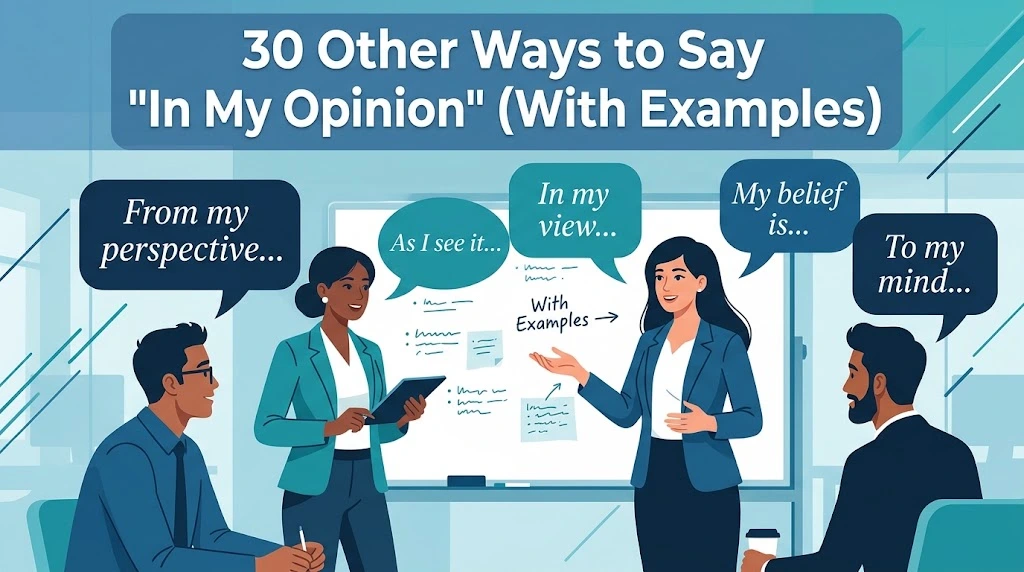
There are many moments in English when you want to share a viewpoint without repeating “in my opinion” every time. Using different opinion phrases can make your writing and speaking sound more polished, natural, confident, formal, or casual depending on the situation.
Learning alternative ways to say “in my opinion” helps you express ideas more clearly in essays, emails, workplace discussions, debates, and everyday conversation. In this guide, the expressions are divided into three sections, with 10 alternatives in each section so the list stays easy to follow and useful.
There are many natural and useful ways to say “in my opinion” in English. Some phrases sound formal, some sound casual, some sound careful, and some sound strong or persuasive. Choosing the right phrase helps your words feel more precise and more natural.
Did You Know About “In My Opinion”?
The phrase “in my opinion” is one of the most common ways to introduce a personal viewpoint in English. It is widely used because it sounds respectful and clearly shows that the statement reflects a personal judgment rather than a fact.
Different alternatives can change the tone a lot. Some sound formal, some sound casual, some sound careful and diplomatic, and some sound more direct or assertive. Choosing the right phrase helps your message fit the audience.
What Does “In My Opinion” Mean?
“In my opinion” means that you are sharing your own view, belief, or judgment about something. It signals that the statement is personal and may differ from other people’s views.
It can be replaced with phrases that sound more formal, more casual, more thoughtful, or more persuasive depending on context.
Professional or Political Way to Say “In My Opinion”
In professional, academic, or political settings, it is often better to sound measured and respectful. Instead of saying “in my opinion,” you can use:
- In my view
- From my perspective
- It appears to me that
- I would argue that
- As I see it
These options sound more polished and are often better for reports, speeches, interviews, and formal discussion.
#1 I believe
Definition: A phrase used to introduce a personal belief or viewpoint in a calm and respectful way.
Meanings: This is what I think is true.
Example 1: I believe this is the right decision.
Example 2: I believe we should wait a little longer.
Detailed Explanation: This is one of the most common and natural alternatives to in my opinion. It sounds thoughtful, balanced, and polite. It works well in both formal and casual settings because it expresses a view without sounding too forceful or too uncertain.
Tone: Calm and thoughtful.
Best use: Everyday conversation, essays, and respectful discussion.
#2 I think
Definition: A simple phrase used to share a personal thought or judgment.
Meanings: This is my view at the moment.
Example 1: I think this solution will work.
Example 2: I think the movie was very moving.
Detailed Explanation: This is probably the most common opinion phrase in spoken English. It sounds natural, direct, and easy to use. It is suitable for almost any conversation, although in formal writing you may want something a little more polished.
Tone: Natural and direct.
Best use: Daily speech, texts, and simple writing.
#3 From my perspective
Definition: A phrase used to show that the idea comes from your own point of view.
Meanings: This is how I personally see the situation.
Example 1: From my perspective, the plan needs more time.
Example 2: From my perspective, the issue is not simple.
Detailed Explanation: This phrase sounds more thoughtful and professional than I think. It is useful when you want to show awareness that other people may see the issue differently. It works especially well in work, writing, and discussions.
Tone: Professional and reflective.
Best use: Workplace communication, essays, and formal talk.
#4 In my view
Definition: A polished phrase used to present a personal opinion politely.
Meanings: This is the way I see it.
Example 1: In my view, the project should continue.
Example 2: In my view, honesty matters most.
Detailed Explanation: This is a very common formal alternative to in my opinion. It sounds clear and respectful without being overly dramatic. It works especially well in written communication, presentations, and formal conversations where balanced language matters.
Tone: Formal and respectful.
Best use: Essays, reports, and professional speech.
#5 It seems to me
Definition: A phrase showing a personal impression based on what you observe.
Meanings: This is how things appear to me.
Example 1: It seems to me that he is confused.
Example 2: It seems to me the idea needs work.
Detailed Explanation: This phrase sounds careful and considerate. It is useful when you want to offer an opinion without sounding too certain or harsh. It creates space for discussion and is often a good choice in polite disagreement or reflective writing.
Tone: Gentle and diplomatic.
Best use: Sensitive discussion and polite disagreement.
#6 Personally
Definition: A word used to emphasize that the opinion is your own.
Meanings: Speaking for myself.
Example 1: Personally, I prefer the first option.
Example 2: Personally, I would wait and see.
Detailed Explanation: This short word is very effective because it quickly tells the listener that the view belongs to you. It is informal but still clear. It works well when you want to sound direct and human without sounding too formal.
Tone: Casual and clear.
Best use: Speech, informal writing, and quick opinions.
#7 To my mind
Definition: A thoughtful phrase used to express your own judgment.
Meanings: This is how I understand the situation.
Example 1: To my mind, this is the best path.
Example 2: To my mind, the policy is unfair.
Detailed Explanation: This phrase has a slightly literary and reflective feel. It is not as common in casual speech, but it can sound elegant in writing. It is useful when you want your opinion to feel considered and careful.
Tone: Reflective and polished.
Best use: Formal writing and thoughtful speech.
#8 As far as I’m concerned
Definition: A phrase meaning your personal view is clear, even if others may disagree.
Meanings: This is my position on the matter.
Example 1: As far as I’m concerned, the deal is done.
Example 2: As far as I’m concerned, we need change.
Detailed Explanation: This phrase sounds stronger than in my opinion and can show confidence. It is useful when you want to make it clear that your point of view is personal but firm. It works well in debates and discussions.
Tone: Confident and assertive.
Best use: Debate, strong statements, and discussion.
#9 I would say
Definition: A phrase used to introduce a careful personal judgment.
Meanings: This is the conclusion I would make.
Example 1: I would say the answer is yes.
Example 2: I would say she handled it well.
Detailed Explanation: This phrase is soft but confident. It is useful when you want to sound reasonable and measured. It often works well when you are offering a thoughtful response without sounding too absolute or blunt.
Tone: Balanced and polite.
Best use: Conversation, interviews, and written responses.
#10 In my estimation
Definition: A formal phrase used to share a considered judgment or evaluation.
Meanings: Based on my assessment, this is true.
Example 1: In my estimation, the plan is risky.
Example 2: In my estimation, the team did well.
Detailed Explanation: This phrase sounds more formal and analytical than many everyday alternatives. It is useful in professional, academic, or strategic settings where careful evaluation matters. It gives your opinion a structured and thoughtful tone.
Tone: Formal and analytical.
Best use: Reports, business communication, and formal analysis.
#11 As I see it
Definition: A phrase used to present your personal view of a situation.
Meanings: This is how I understand the matter.
Example 1: As I see it, the issue is simple.
Example 2: As I see it, we need more time.
Detailed Explanation: This is a natural and flexible opinion phrase. It sounds a little more conversational than in my view, but it still feels thoughtful. It works well in both casual and semi-formal discussions because it is easy to understand and balanced.
Tone: Friendly and clear.
Best use: Conversation, presentations, and informal writing.
#12 My take is
Definition: A casual phrase used to introduce your personal opinion.
Meanings: Here is my viewpoint.
Example 1: My take is that the project needs revision.
Example 2: My take is that the idea is promising.
Detailed Explanation: This phrase is modern and conversational. It sounds relaxed and confident, making it great for spoken English, blogs, and casual discussions. It is less formal than some other alternatives, but it feels natural and direct.
Tone: Casual and confident.
Best use: Speaking, blogging, and informal discussion.
#13 I feel
Definition: A phrase used to express a personal impression or belief.
Meanings: This is my emotional or intuitive view.
Example 1: I feel we should go now.
Example 2: I feel this approach is better.
Detailed Explanation: This phrase is common and versatile, especially in spoken English. It can express emotion, intuition, or opinion depending on the context. It is helpful when you want your point to sound personal and human.
Tone: Personal and soft.
Best use: Conversation and emotional discussion.
Read More: 30 Other Ways to Say “As Well As” (With Examples)
#14 It strikes me that
Definition: A phrase used to share a thought that has just come to you.
Meanings: It occurs to me that.
Example 1: It strikes me that this is unfair.
Example 2: It strikes me that he is unsure.
Detailed Explanation: This phrase sounds reflective and slightly formal. It is useful when you are presenting an observation that feels important or newly noticed. It gives your opinion a thoughtful and somewhat literary quality.
Tone: Reflective and formal.
Best use: Essays, analysis, and careful speech.
#15 I suppose
Definition: A phrase used to express a mild or cautious opinion.
Meanings: I guess; I think so.
Example 1: I suppose that could work.
Example 2: I suppose we should try again.
Detailed Explanation: This phrase sounds modest and less forceful than in my opinion. It is useful when you want to soften your view or avoid sounding too certain. It can also make your speech feel calm and approachable.
Tone: Mild and cautious.
Best use: Polite conversation and soft disagreement.
#16 I’d argue
Definition: A phrase used to introduce a stronger, more reasoned opinion.
Meanings: My position is that.
Example 1: I’d argue that the law needs change.
Example 2: I’d argue that this is the better option.
Detailed Explanation: This phrase sounds assertive and thoughtful. It is often used in debate, writing, or analytical conversation. It suggests that you are not just expressing a feeling but presenting a reasoned view.
Tone: Strong and analytical.
Best use: Debate, essays, and persuasive writing.
#17 I’d suggest
Definition: A phrase used to offer an opinion in a gentle, advisory way.
Meanings: My recommendation is.
Example 1: I’d suggest trying a different method.
Example 2: I’d suggest waiting until tomorrow.
Detailed Explanation: This phrase is useful when you want your opinion to sound helpful rather than forceful. It is common in professional and personal conversation because it feels respectful and constructive.
Tone: Helpful and polite.
Best use: Advice, meetings, and collaboration.
#18 It appears to me
Definition: A phrase showing that your view is based on observation.
Meanings: It looks to me like.
Example 1: It appears to me that she is tired.
Example 2: It appears to me the report is incomplete.
Detailed Explanation: This phrase sounds thoughtful and a bit formal. It is useful when you want to sound calm and observant rather than overly direct. It works well in writing, discussion, and analytical contexts.
Tone: Calm and observant.
Best use: Formal speech and reflective writing.
#19 From where I stand
Definition: A phrase used to show your opinion based on your personal position or experience.
Meanings: From my point of view.
Example 1: From where I stand, the choice is obvious.
Example 2: From where I stand, the deal is fair.
Detailed Explanation: This phrase sounds grounded and personal. It is often used when someone wants to speak from experience rather than theory. It gives your statement a solid, practical tone.
Tone: Grounded and practical.
Best use: Discussion, opinion writing, and personal reflection.
#20 My view is
Definition: A direct phrase used to clearly state a personal opinion.
Meanings: This is my opinion.
Example 1: My view is that we should continue.
Example 2: My view is that the policy helps.
Detailed Explanation: This phrase is clear, direct, and professional. It works well in formal writing and speeches because it introduces your opinion in a structured way. It sounds confident without being rude or aggressive.
Tone: Professional and clear.
Best use: Essays, meetings, and formal discussion.
#21 In my judgment
Definition: A formal phrase used to express a considered personal decision or evaluation.
Meanings: Based on my evaluation, this is true.
Example 1: In my judgment, the case is weak.
Example 2: In my judgment, the team made progress.
Detailed Explanation: This phrase sounds serious and official. It is often used in professional, legal, or academic contexts where careful evaluation matters. It gives your opinion authority and a sense of responsibility.
Tone: Formal and authoritative.
Best use: Legal, academic, and professional writing.
#22 In my estimation
Definition: A phrase used to present a thoughtful estimate or opinion.
Meanings: In my assessment, this is the case.
Example 1: In my estimation, the plan will succeed.
Example 2: In my estimation, the cost is too high.
Detailed Explanation: This is a polished and analytical phrase. It works well when you want to sound experienced and careful. It is especially useful in formal reports, business writing, and measured discussion.
Tone: Formal and analytical.
Best use: Reports, strategy, and serious analysis.
#23 To me
Definition: A simple phrase used to show a personal reaction or viewpoint.
Meanings: From my point of view.
Example 1: To me, this seems unfair.
Example 2: To me, the ending was perfect.
Detailed Explanation: This is one of the easiest ways to express an opinion in everyday English. It is short, direct, and very natural. It works especially well in spoken conversation and informal writing when clarity matters more than formality.
Tone: Simple and direct.
Best use: Conversation, messages, and casual writing.
#24 I’m of the opinion that
Definition: A formal phrase used to introduce a personal belief or stance.
Meanings: I believe that.
Example 1: I’m of the opinion that the rule should change.
Example 2: I’m of the opinion that honesty matters most.
Detailed Explanation: This phrase sounds more formal and deliberate than I think or I believe. It is useful in speeches, essays, or official communication when you want to sound thoughtful and composed.
Tone: Formal and steady.
Best use: Formal writing and speeches.
#25 If you ask me
Definition: A casual phrase used when offering a personal opinion directly.
Meanings: This is my honest view.
Example 1: If you ask me, the first choice is better.
Example 2: If you ask me, we should leave now.
Detailed Explanation: This phrase sounds conversational and confident. It is often used when someone wants to state an opinion in a relaxed and slightly emphatic way. It works very well in spoken English and casual writing.
Tone: Casual and confident.
Best use: Everyday speech and informal discussion.
#26 Honestly
Definition: A word used to introduce a frank or sincere opinion.
Meanings: Truthfully, this is what I think.
Example 1: Honestly, I don’t like the idea.
Example 2: Honestly, I think it will work.
Detailed Explanation: This word adds directness and sincerity. It can make your opinion sound more personal and emotionally real. It is common in speech and informal writing, especially when you want to sound open and straightforward.
Tone: Direct and sincere.
Best use: Casual conversation and personal reactions.
#27 I’m inclined to think
Definition: A thoughtful phrase showing that your view leans in a certain direction.
Meanings: I am leaning toward believing.
Example 1: I’m inclined to think he is right.
Example 2: I’m inclined to think this is the best answer.
Detailed Explanation: This phrase sounds refined and careful. It is useful when you want to express an opinion without sounding absolute. It works well in professional, academic, and thoughtful written communication.
Tone: Measured and refined.
Best use: Essays, discussion, and formal reasoning.
#28 I’d venture to say
Definition: A phrase used when you are making a careful or slightly tentative opinion.
Meanings: I would risk saying.
Example 1: I’d venture to say this is the best option.
Example 2: I’d venture to say the results are encouraging.
Detailed Explanation: This phrase sounds polished and a little literary. It is useful when you want to offer an opinion that feels thoughtful, careful, and slightly sophisticated. It works especially well in writing and formal speech.
Tone: Elegant and careful.
Best use: Formal writing and polished speech.
#29 My understanding is
Definition: A phrase used to share your interpretation of something.
Meanings: This is how I understand it.
Example 1: My understanding is that the meeting was moved.
Example 2: My understanding is that the matter is settled.
Detailed Explanation: This phrase is very useful in professional and formal settings. It shows that your statement comes from your interpretation of the facts. It sounds careful, respectful, and useful in discussion or clarification.
Tone: Formal and clear.
Best use: Workplace communication and explanation.
#30 I am convinced that
Definition: A phrase used to show a strong personal belief or opinion.
Meanings: I strongly believe this is true.
Example 1: I am convinced that this will succeed.
Example 2: I am convinced that she made the right choice.
Detailed Explanation: This phrase is stronger and more confident than many others on the list. It is useful when you want to make your opinion sound firm and well considered. It works well in persuasive writing, speeches, and serious discussion.
Tone: Confident and persuasive.
Best use: Debate, speeches, and strong opinions.
FAQs
What is the most common way to say “in my opinion” differently?
I think, I believe, and In my view are among the most common alternatives.
What is a professional way to say “in my opinion”?
From my perspective, In my view, and My understanding is sound professional and polished.
What is a casual way to say “in my opinion”?
Personally, If you ask me, and To me are natural casual options.
What is a strong way to express an opinion?
I’d argue, I’m convinced that, and As far as I’m concerned sound more assertive.
Can these phrases be used in essays and reports?
Yes, especially In my view, In my judgment, From my perspective, and I would argue.
Conclusion
There are many natural and useful ways to say “in my opinion” in English. Some phrases sound formal, some sound casual, some sound careful, and some sound strong or persuasive. Choosing the right phrase helps your words feel more precise and more natural.
Whether you are writing an essay, speaking in a meeting, sharing your thoughts with friends, or making a polite disagreement, these alternatives give you more flexibility and confidence. With the right expression, your opinion can sound clearer, more thoughtful, and more effective.