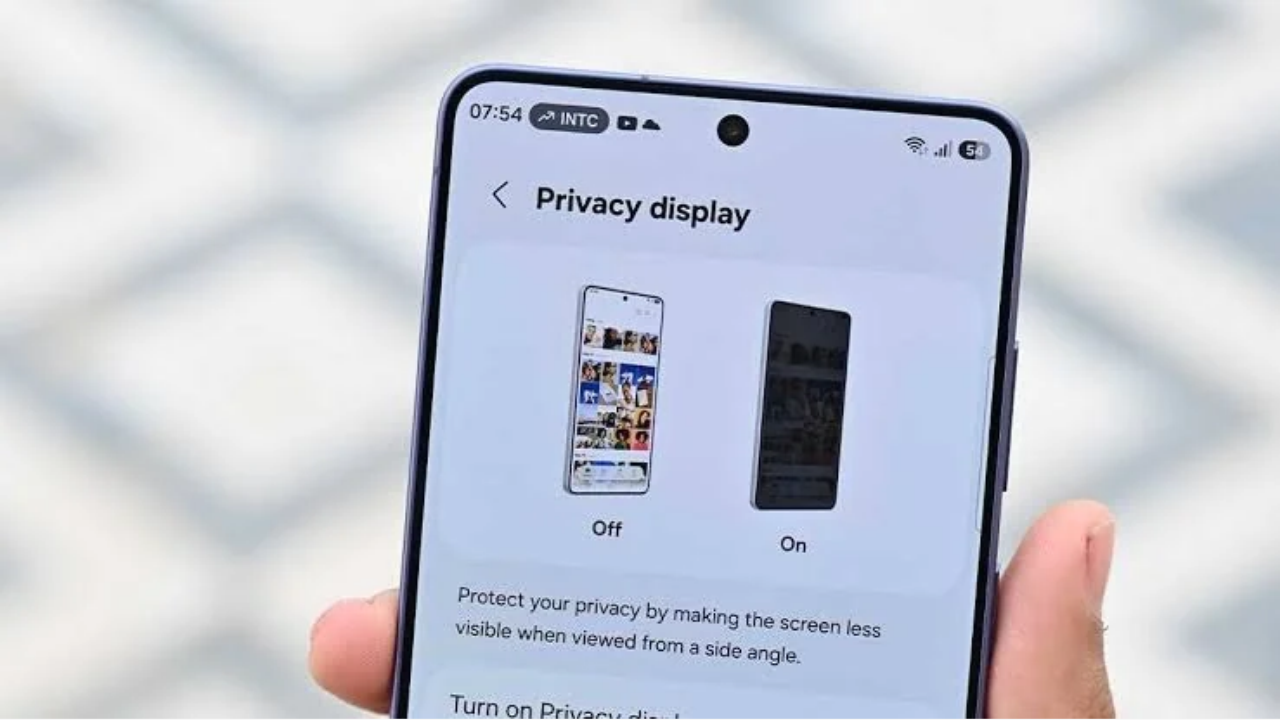
Privacy Display on Galaxy S27 Pro and S27 Ultra Looks More Promising in Latest Leak
Samsung appears to be preparing a significant improvement to one of its most interesting smartphone display technologies. According to a new leak, the upcoming Galaxy S27 Pro and Galaxy S27 Ultra could feature an upgraded version of the company’s Privacy Display technology, alongside brighter screens designed to improve outdoor visibility. If the information proves accurate, Samsung could address some of the limitations of its first-generation privacy screen while making the feature available on more premium Galaxy smartphones.
The latest information comes from a report by SamMobile, which claims that Samsung is developing an enhanced Privacy Display for two devices in its next-generation Galaxy S27 lineup. The report also suggests that both smartphones will benefit from improved display brightness. Although Samsung has not officially confirmed these specifications, the new information strengthens earlier rumours about the company’s plans for its 2027 flagship smartphone family.
Privacy Display made its debut with the Galaxy S26 Ultra earlier this year, introducing a different approach to smartphone privacy. Instead of relying entirely on traditional screen protectors or software-based privacy solutions, Samsung integrated technology directly into the display to restrict visibility from certain viewing angles.
The feature has attracted attention because it allows users to protect sensitive information without requiring an additional accessory. However, its first-generation implementation also has some limitations, particularly concerning brightness and image quality when privacy protection is enabled.
With the Galaxy S27 Pro and Galaxy S27 Ultra, Samsung could be preparing to make the technology more practical for everyday use.
Samsung Reportedly Preparing an Improved Privacy Display
According to the latest leak, Samsung plans to introduce an upgraded Privacy Display on the Galaxy S27 Pro and Galaxy S27 Ultra. Both devices are reportedly expected to receive a more advanced implementation of the technology compared with the version available on the Galaxy S26 Ultra.
The report does not provide detailed technical specifications or explain exactly how Samsung intends to improve the feature. However, the confirmation that the company is working on a revised version suggests that Privacy Display will remain an important part of its premium smartphone strategy.
The original technology was designed to prevent people sitting or standing beside the smartphone user from easily reading information displayed on the screen. When activated, it restricts the display’s viewing angles, making the content difficult to see from the sides while remaining visible to the person looking directly at the device.
This approach is particularly useful in crowded environments where maintaining screen privacy can be difficult. Whether someone is checking private messages on public transport, reviewing banking information in a coffee shop, or entering a password in a crowded office, the feature offers an additional layer of protection.
Samsung also provides flexibility in how Privacy Display works. Users can activate it across the entire screen or configure it to protect specific content, including notifications and selected applications.
The ability to apply privacy protection selectively is especially useful because users do not necessarily need to hide everything displayed on their phones. They can continue using their devices normally while keeping sensitive information less visible to people nearby.
The Galaxy S27 generation could make this experience even better by improving the underlying display technology rather than simply introducing additional software controls.
Why the First-Generation Privacy Display Needs Improvement
Although Privacy Display is an interesting addition to the Galaxy S26 Ultra, its first implementation is not without compromises.
One of the biggest challenges with directional privacy technology is balancing viewing-angle restrictions with display quality. Narrowing the viewing angle can make information less visible to people nearby, but it can also affect brightness, contrast and sharpness for the actual user.
This is an important consideration because modern flagship smartphones are expected to deliver excellent display quality in practically every situation. Users purchase premium devices to enjoy sharp images, vibrant colours and excellent outdoor readability. A privacy feature should ideally provide additional protection without significantly compromising those characteristics.
Reports examining the Galaxy S26 Ultra’s implementation have highlighted a noticeable brightness reduction when Privacy Display is enabled. Notebookcheck, for example, reported a reduction from 1,000 nits to approximately 636 nits in its testing. This illustrates how activating the privacy feature can affect the amount of light reaching the viewer.
Such a reduction may not be particularly noticeable in a dimly lit room. However, it becomes more problematic outdoors, especially when users are trying to read messages, browse websites or navigate under direct sunlight.
Image quality is another consideration. Some implementations of directional privacy technology can make the screen appear softer or less clear when viewed directly. This creates a situation in which users must choose between protecting their information and enjoying the display at its best.
For a feature intended to remain useful throughout the day, these compromises matter.
Samsung’s reported plans for the Galaxy S27 Pro and Galaxy S27 Ultra could address this problem. If the company manages to preserve more brightness and clarity while restricting side-angle visibility, Privacy Display could become considerably more appealing.
Brighter Displays Could Make a Significant Difference
One of the most interesting details in the latest leak is the reference to enhanced display brightness.
According to the report, both the Galaxy S27 Pro and Galaxy S27 Ultra are expected to feature brighter displays. This could improve outdoor readability and make the privacy technology more practical in challenging lighting conditions.
Brightness is particularly important for smartphones because displays are used in a wide range of environments. A screen that looks excellent indoors might become difficult to read when exposed to direct sunlight.
The situation becomes more complicated when privacy protection is enabled. If activating the feature reduces the available brightness, users may find themselves switching it off whenever they move outdoors.
An improved implementation could help Samsung eliminate this inconvenience.
For example, if the next-generation panels maintain higher brightness while Privacy Display is active, users could potentially keep sensitive information protected without sacrificing readability. This would be a meaningful improvement over simply increasing the maximum brightness of the standard display.
However, the latest leak does not provide any specific brightness figures. It is also unclear whether the reported improvement refers to peak brightness, sustained brightness or brightness specifically available when Privacy Display is enabled.
These distinctions are important. A smartphone can advertise impressive peak brightness figures while delivering considerably lower brightness during regular use.
Samsung will therefore need to demonstrate meaningful improvements in real-world conditions rather than relying exclusively on headline specifications.
For now, the brighter display claim should be treated as an early indication of Samsung’s plans rather than a confirmed performance improvement.