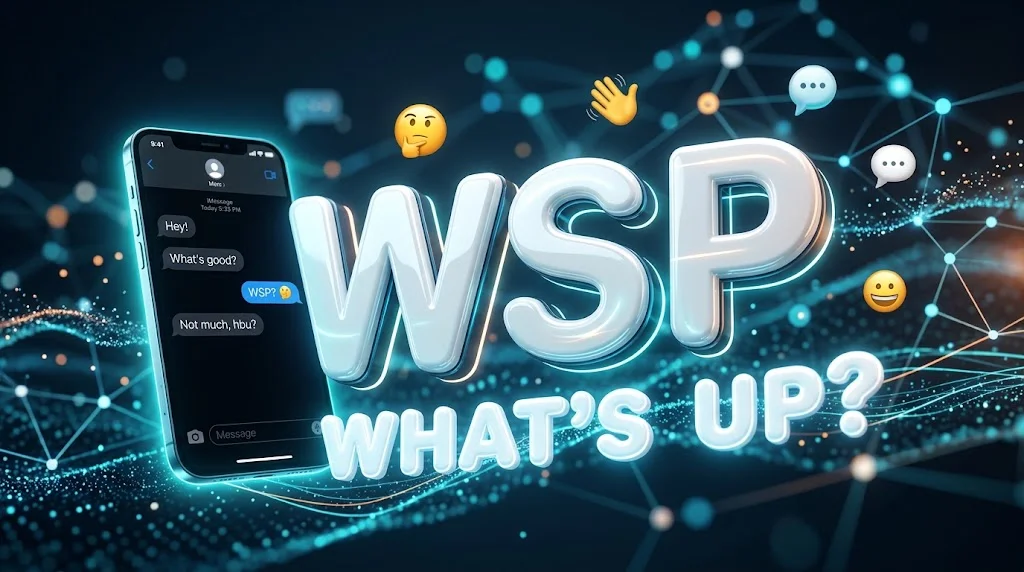
WSP meaning in texting is usually “What’s up?” People use this popular text abbreviation in text messages, online chats, and social media conversations to greet someone or ask what they are doing. If a friend sends you “WSP,” they are probably saying hello or starting a casual conversation. It is a common example of internet slang used in everyday digital communication.You may see WSP in texting on platforms like Snapchat, Instagram, WhatsApp, TikTok, Facebook Messenger, and Discord.
Instead of typing the complete phrase “What’s up?”, people use these three letters to save time and keep their messages short. This makes WSP especially useful in casual conversations, quick replies, and informal messages.For example, if someone texts you, “Hey, WSP?”, you can reply with “Nothing much, you?” or “Just chilling.” These responses keep the conversation friendly and natural. Depending on the situation, WSP can also mean how are you, what are you doing, or what’s happening.
However, the exact meaning may depend on the context of the conversation, the relationship between the sender and receiver, and the messaging platform. Although WSP is widely understood as “What’s up?”, it can have other meanings in specific situations. Understanding this texting slang, its usage, and common replies can help you communicate more confidently in online conversations.
Quick Answer
WSP meaning in the USA is usually “What’s up?” It’s a casual greeting used to ask what someone is doing, how they’re feeling, or what’s happening in their life. In some contexts, WSP can have other meanings, so the conversation matters.
TL;DR
- WSP usually stands for “What’s up?” in texting.
- It’s commonly used on Snapchat, Instagram, Discord, and WhatsApp.
- People use it to greet friends or start conversations.
- A simple reply is “NM, you?” meaning “Not much, you?”
- WSP is informal and usually suits casual conversations.
- Its meaning can change in professional or specialized contexts.
What Does WSP Mean in Texting?
WSP is a shortened form of “What’s up?” People use it when they want to start chatting without writing a full sentence. In American texting culture, it’s similar to saying “Hey,” “What’s going on?” or “How’s it going?”
Common Examples of WSP in Text Messages
Here are some examples of how people use WSP in everyday conversations:
- “WSP bro?” — What’s up, bro?
- “WSP with you?” — What’s going on with you?
- “Hey, WSP?” — Hey, what’s up?
- “WSP tonight?” — What’s happening tonight?
- “WSP, haven’t talked in a while!” — How have you been?
The exact meaning depends on the wording. For instance, “WSP tonight?” might be asking about someone’s plans rather than simply greeting them.
Is WSP the Same as What’s Up?
Yes, in most casual messages, WSP is simply an abbreviated way to write “What’s up?” The abbreviation removes the need to type the full phrase.
However, WSP doesn’t automatically mean someone wants detailed information about your life. Often, it’s just a friendly way to open a conversation.
Read More:OML Meaning: What It Means in Text and Social Media
What Does WSP Mean on Snapchat and Instagram?
On Snapchat and Instagram, WSP usually works as a conversation starter. Someone may send it when they want to talk but don’t have a particular topic in mind. It’s especially common in informal chats between friends and acquaintances.
WSP on Snapchat
On Snapchat, a person might send “WSP?” after adding you or seeing your story. They may be checking whether you’re available to chat.
For example:
Person A: WSP?
Person B: Nothing much, just chilling. You?
This exchange is casual and friendly. However, the message alone doesn’t prove romantic interest or any particular intention.
WSP in Instagram DMs
On Instagram, WSP can appear in direct messages after someone follows you, replies to your story, or wants to reconnect.
For example:
Person A: WSP, how have you been?
Person B: I’ve been good! Just busy with work.
Here, WSP opens the conversation, while the rest of the message makes the greeting more personal.
What Does WSP Mean on WhatsApp and Discord?
WSP can also appear on WhatsApp and Discord, although the surrounding context may differ. On WhatsApp, it often functions as a quick greeting between friends or family members. On Discord, it can be used in group chats, gaming communities, and private messages.
WSP on WhatsApp
A WhatsApp message such as “WSP bro, you home?” combines a greeting with a practical question. The sender wants to know what’s happening and whether you’re available.
In this context, you can answer both parts directly:
“Yeah, I’m home. What’s up?”
WSP on Discord and Gaming Chats
Discord users often prefer short messages because conversations move quickly. Therefore, WSP can be a convenient way to check whether friends are online or ready to play.
For example:
Player A: WSP?
Player B: Just got on. Wanna play?
The abbreviation still means “What’s up?” However, the gaming context may make the conversation more focused on playing together.
How to Reply to WSP in Texting
The easiest way to reply to WSP is to keep your response casual. You don’t need to write a long message unless you want to share more information.
Friendly Replies to WSP
If a friend sends WSP, you can respond with one of these messages:
- “Not much, you?”
- “Hey! What’s up?”
- “Just chilling. What about you?”
- “Nothing special, how are you?”
- “All good here. What’s going on?”
These replies work because they acknowledge the greeting and give the other person an opportunity to continue the conversation.
Flirty Replies to WSP
If someone you like sends WSP, you can answer warmly without assuming they’re flirting.
For example:
- “Nothing much, just thinking about what to do tonight.”
- “Hey you! How’s your day going?”
- “Not much now, but your message made me smile.”
- “Just relaxing. What are you up to?”
Your relationship with the sender matters more than the abbreviation itself. A WSP message can be friendly, romantic, or completely neutral.
Short and Funny Replies
If you prefer playful conversations, you could reply:
- “The sky! 😂”
- “Same old, same old.”
- “Waiting for your interesting news.”
- “Trying to survive Monday!”
- “Nothing much. Entertain me!”
Choose a response that matches your usual communication style. A joke can work well with friends, but a straightforward reply may suit a new acquaintance better.
WSP vs. WYD, HRU, and SUP
WSP belongs to a larger group of texting abbreviations. Although these expressions can sound similar, each has a slightly different focus.
| Abbreviation | Full Meaning | Common Purpose |
| WSP | What’s up? | General greeting or conversation starter |
| WYD | What are you doing? | Asking about someone’s current activity |
| HRU | How are you? | Checking on someone’s well-being |
| SUP | What’s up? | Casual greeting |
| NM | Not much | Saying that little is happening |
| WBU | What about you? | Returning a question to the other person |
When Should You Use WSP Instead of WYD?
Use WSP when you want to open a conversation broadly. It allows the other person to talk about their activities, mood, plans, or anything else.
By contrast, WYD directly asks what someone is doing at that moment. For example, “WSP?” is a general greeting, while “WYD tonight?” usually asks about someone’s plans.
Is WSP More Casual Than HRU?
Both are informal, but they can create slightly different impressions. HRU focuses more directly on how someone feels, while WSP can be a simple greeting without expecting a detailed answer.
Neither abbreviation is automatically more friendly or more meaningful. The sender’s usual texting habits and the conversation’s context make the difference.
Why Do People Use WSP Instead of What’s Up?
People use WSP because it’s short, quick, and easy to understand. In fast-moving digital conversations, abbreviations reduce typing without changing the basic message.
Speed and Convenience
Short forms are especially useful when people are messaging while gaming, commuting, or switching between apps. Rather than typing the entire phrase, they can send three letters and begin the conversation.
Casual Online Communication
Abbreviations can also make messages feel relaxed. In the United States, casual texting often includes shortened words, contractions, and informal greetings.
For example, “WSP bro?” may sound more natural between close friends than a formal greeting. However, this depends on the people involved and their preferred communication styles.
Social Belonging and Digital Habits
Using familiar abbreviations can help people feel comfortable in online communities. Friends may develop their own shorthand over time, especially when they message each other frequently.
Still, using WSP isn’t a requirement for fitting in. Writing “What’s up?” in full is equally understandable.
Is WSP Rude, Friendly, or Flirty?
WSP is generally neutral and casual. By itself, it doesn’t indicate rudeness, romantic interest, or a particular emotional attitude.
When WSP Sounds Friendly
A friend who sends “WSP?” may simply want to catch up or start talking. If they usually greet people this way, the message likely reflects their normal texting habits.
When WSP Might Be Flirty
WSP could be part of a flirtatious conversation when combined with other signs of interest. For example, someone might regularly message you, ask personal questions, or suggest spending time together.
However, the abbreviation alone isn’t enough to establish romantic interest. Look at the wider conversation rather than reading too much into three letters.
When WSP Can Feel Abrupt
Some people may find a message containing only “WSP” a little vague, especially when they don’t know the sender well. Nevertheless, brevity doesn’t necessarily mean the person is being dismissive.
If you need clarification, you can respond naturally with “Hey! What’s up?” or ask what they wanted to discuss.
Does WSP Have Other Meanings?
Although “What’s up?” is the most familiar meaning in casual texting, WSP can stand for other phrases in specialized settings. Its meaning depends on the subject, workplace, organization, or conversation.
Alternative Meanings in Specialized Contexts
Depending on the setting, WSP may be used as an abbreviation for:
- Water and sanitation programs: In discussions about public health or infrastructure, the letters may refer to water and sanitation-related work.
- Web Services Provider: In some technical or business contexts, WSP may be used for a service provider associated with web services.
- Workplace-specific terms: An organization may use WSP as shorthand for an internal project, process, or document.
These examples are context-dependent and shouldn’t be treated as universal definitions. If WSP appears in a technical document, don’t automatically interpret it as a greeting.
How to Identify the Correct Meaning
Start by looking at where you encountered the abbreviation. A private message from a friend usually calls for a different interpretation than a technical report.
Also, read the surrounding sentence and consider the subject being discussed. When the meaning remains unclear, asking the sender is often the simplest solution.
Common Misunderstandings About WSP
Because WSP is short, people sometimes assign it meanings that the message doesn’t actually support. Understanding these misunderstandings can help prevent confusion in digital conversations.
WSP Doesn’t Always Mean Someone Wants to Meet
A person who sends WSP may simply want to chat. Although the conversation could lead to making plans, the abbreviation doesn’t automatically suggest an invitation.
WSP Doesn’t Prove Romantic Interest
A message from someone you like can feel exciting. However, WSP is widely used as a general greeting, so it shouldn’t be treated as proof of attraction.
WSP Isn’t Always Appropriate at Work
Among coworkers who communicate casually, WSP may be perfectly acceptable. In a formal email to a manager, customer, or unfamiliar professional, a complete greeting is usually clearer.
For example, “Hi, I hope you’re doing well” is more suitable for a formal business message. The right choice depends on workplace expectations and your relationship with the recipient.
Conclusion
The WSP meaning in text messages is most commonly “What’s up?” It is a simple, friendly abbreviation used to greet people, check what they are doing, or start a conversation. You can find it in social media messages, group chats, and everyday online communication. When someone sends you WSP, you can respond with “Nothing much,” “I’m good,” or “Just relaxing.” Remember that WSP is informal, so it works best when chatting with friends, family, and people you know rather than in professional emails or formal conversations.
FAQs
1. What does WSP mean in texting?
WSP usually means “What’s up?” It is an informal greeting used to ask how someone is doing or what they are doing.
2. What does WSP mean on Snapchat?
On Snapchat, WSP generally means “What’s up?” People use it to start conversations, check in with friends, or ask what someone is doing.
3. How do you reply to WSP?
You can reply with “Nothing much,” “Just chilling,” “I’m good,” or “Not much, what about you?” Choose a response that fits the conversation.
4. Does WSP mean what’s up?
Yes, WSP most commonly stands for “What’s up?” in texting and online conversations.
5. What does WSP mean on WhatsApp?
On WhatsApp, WSP usually means “What’s up?” It is a quick way to greet someone or ask what is happening.
6. Is WSP flirting?
Not necessarily. WSP is usually a casual greeting, but it can be part of a flirty conversation depending on the sender, the relationship, and the surrounding messages.
7. Is WSP formal or informal?
WSP is informal internet slang. It is suitable for texting friends and chatting online, but you should avoid it in formal emails and professional communication.
8. What is the difference between WSP and WYD?
WSP means “What’s up?” and can be used as a general greeting. WYD means “What are you doing?” and more directly asks about someone’s current activity.