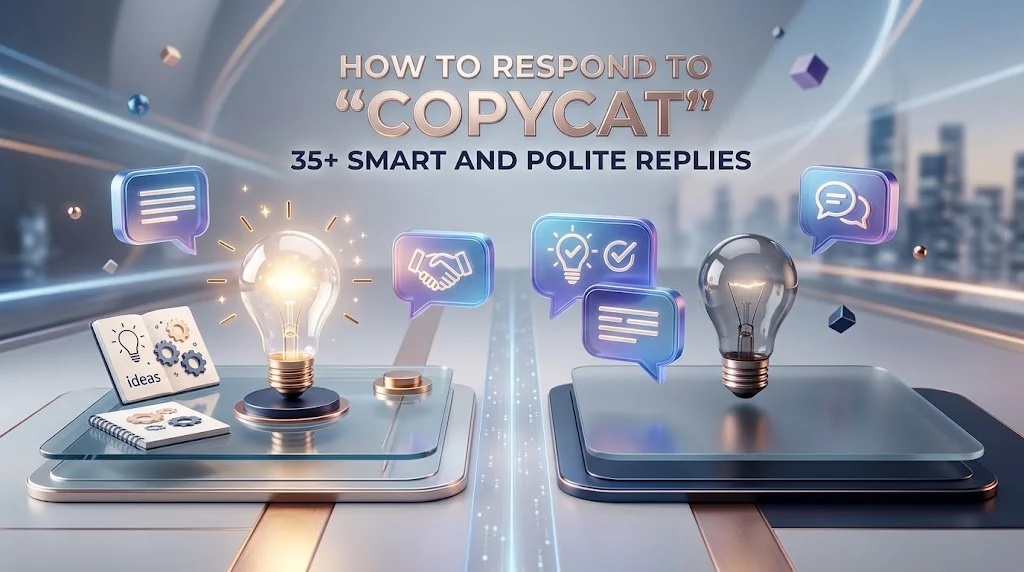
Knowing how to respond to “Copycat” can help you handle a teasing comment, playful accusation, or genuine criticism without making the conversation awkward. Someone may call you a copycat, imitator, or mimic when they think you are copying their style, ideas, behavior, look, or actions. The meaning often depends on the context, tone, and relationship between the people involved.
In a friendly conversation, “copycat” may simply be a playful insult, joke, or teasing remark. In other situations, it can sound rude, annoying, sarcastic, or even accusatory. Your response should match the situation rather than automatically becoming defensive.You can answer with humor, confidence, politeness, or a simple comeback. For example, you might say, “Great minds think alike,” if someone is joking with you.
If they are seriously accusing you of copying, you can calmly explain your intentions and clarify that you had a similar idea rather than copying them.Understanding social cues, conversation tone, body language, and personal boundaries can help you choose the right response. Whether you want a funny reply, witty comeback, polite response, short answer, or confident reply, there are many natural ways to handle “copycat.”
Quick Answer
To respond to “Copycat,” use a funny, confident, or polite reply that matches the situation. For example, say, “Great minds think alike!” for friendly teasing or “I just have my own taste” when someone sounds critical.
TL;DR
- Use humor when a friend playfully calls you a copycat.
- Choose confident replies when someone questions your originality.
- Stay polite when you want to avoid unnecessary arguments.
- Set boundaries when teasing becomes disrespectful.
- Explain your inspiration when someone misunderstands your choices.
- Remember that similar interests don’t always mean intentional copying.
Read More:FOMO Meaning: What It Really Means in Everyday Life
What Does “Copycat” Mean in Everyday Conversation?
Before choosing a response, understand what the word actually communicates. In the United States, people use “copycat” in casual conversations, school settings, workplaces, and online discussions.
The Meaning Behind the Word
A copycat is someone who imitates another person’s actions, ideas, style, behavior, or choices.
For example, imagine buying a new pair of sneakers. A friend purchases the same pair the following week. Someone might jokingly call that friend a copycat.
However, the word doesn’t always describe something negative.
- Friends may use it as playful teasing.
- Family members may use it when siblings imitate each other.
- Coworkers may use it when someone repeats an idea.
- Online users may use it when trends look unusually similar.
Is Being Called a Copycat an Insult?
It depends on the speaker’s tone and intention.
When someone smiles and laughs, they’re probably teasing you. However, an angry or sarcastic tone may suggest criticism.
For example, calling someone a copycat after they wear matching clothes can be harmless. Accusing someone of stealing creative work carries a different meaning.
Therefore, consider the situation before responding.
How to Respond to “Copycat” Without Sounding Rude
Your response doesn’t need to be complicated. A short, natural sentence can show confidence without making the conversation uncomfortable.
Simple and Natural Responses
These replies work when you want to acknowledge the comment without starting an argument.
- “I guess we have similar taste!”
- “Great minds think alike.”
- “It’s just a coincidence.”
- “I didn’t realize we matched.”
- “Looks like we’re on the same wavelength.”
- “I simply liked the same thing.”
When You Want to Stay Confident
Sometimes, the other person expects you to become defensive. Instead, calmly explain that you make your own decisions.
Try these responses:
- “I have my own style.”
- “I like what I like.”
- “Having similar interests isn’t copying.”
- “I’m comfortable with my choices.”
- “You don’t own that idea.”
- “Everyone gets inspiration from somewhere.”
These statements communicate independence without insulting anyone.
Funny Responses to “Copycat”
7
Humor can turn an awkward comment into a friendly moment. These responses are particularly useful when someone you know is joking.
Funny Copycat Comebacks
- “Sorry, your style was too good to ignore!”
- “Imitation is the sincerest form of flattery.”
- “I guess we’re sharing one brain cell!”
- “You should feel honored!”
- “It’s called having excellent taste.”
- “I learned from the best!”
- “We’re basically a matching set!”
- “Don’t worry, I’m the limited edition!”
When Should You Use Funny Replies?
Funny responses work best when both people understand the joke.
For example, imagine your friend buys a blue hoodie. You purchase the same one because you genuinely like it.
Your friend says, “You’re such a copycat!”
You could respond, “What can I say? Great minds think alike!”
However, avoid joking when someone is genuinely upset. Humor can sometimes make misunderstandings worse.
Clever Responses to “Copycat”
A clever response shows that you understand the comment without becoming defensive. These replies work well in casual conversations and friendly debates.
Smart and Witty Comebacks
- “Originality doesn’t mean avoiding everything familiar.”
- “Maybe we just have similar ideas.”
- “Good taste is worth repeating.”
- “I prefer calling it inspiration.”
- “You noticed? That’s interesting!”
- “Different people can like the same things.”
- “I didn’t know you owned that style.”
- “Being similar doesn’t mean being identical.”
Why Clever Responses Work
A clever answer changes the direction of the conversation. Instead of arguing about who copied whom, you introduce another way to understand the situation.
For example, two people can independently choose similar outfits. Their choices don’t automatically prove that one person copied the other.
Likewise, enjoying the same music or hobbies doesn’t make someone unoriginal.
Polite Responses to “Copycat”
Not every conversation needs a comeback. Sometimes, a respectful answer protects the relationship and prevents unnecessary tension.
Respectful Replies
Use these when speaking with classmates, relatives, coworkers, or acquaintances.
- “I understand why you might think that.”
- “I just happened to like the same thing.”
- “I didn’t mean to copy you.”
- “We probably have similar preferences.”
- “I appreciate your perspective.”
- “It wasn’t intentional.”
- “I hope you don’t misunderstand my intentions.”
When Politeness Matters
In American workplaces and professional environments, calm communication often helps resolve misunderstandings.
For instance, a coworker might notice that you presented an idea similar to theirs. Instead of arguing, explain how you developed your suggestion.
However, if you genuinely used their work, acknowledge their contribution rather than dismissing their concern.
Savage but Classy Responses to “Copycat”
Sometimes, you want a stronger answer without becoming disrespectful. A confident response can communicate that you’re not interested in unnecessary criticism.
Confident Comebacks
- “Confidence looks good on me, doesn’t it?”
- “I’m comfortable being myself.”
- “You can think whatever you want.”
- “I don’t need permission to like something.”
- “Similar doesn’t mean stolen.”
- “Let’s not make this bigger than it is.”
- “I know my own intentions.”
- “Your opinion doesn’t define my personality.”
These responses work best when someone repeatedly questions your originality.
However, remember that confidence and aggression aren’t the same thing. You can stand up for yourself without humiliating another person.
How to Respond When a Friend Calls You a Copycat
Friends often use “copycat” as a joke. They might notice matching clothes, similar hairstyles, or repeated phrases.
Your response should keep the friendship comfortable while showing your personality.
Friendly Responses
- “We just have amazing taste!”
- “Best friends naturally think alike.”
- “Maybe we’re more alike than we thought.”
- “You inspired me, what can I say?”
- “It’s our unofficial friendship uniform!”
- “At least we have something in common.”
- “Looks like we’re becoming twins!”
Example Conversation
Friend: “You bought the same shoes as me? Copycat!”
You: “What can I say? You have excellent taste!”
This response acknowledges the joke without making things awkward.
However, if your friend sounds genuinely annoyed, try asking whether something is bothering them.
How to Respond to “Copycat” at School
School conversations often involve clothes, homework, projects, hobbies, and personal interests. Sometimes, students use “copycat” to tease classmates.
The best response depends on whether someone is joking or making a serious accusation.
Responses for Classmates
- “We just had the same idea.”
- “I didn’t copy your work.”
- “Having similar answers doesn’t prove anything.”
- “I came up with my own approach.”
- “Let’s focus on our assignments.”
- “You can check how I worked it out.”
When Someone Accuses You of Copying Schoolwork
This situation deserves a more serious response.
If you completed your work independently, calmly explain your process. You can also show your notes or earlier drafts when appropriate.
However, if you used another student’s work, acknowledge it honestly. Taking responsibility helps rebuild trust.
How to Respond to “Copycat” at Work
Workplace situations require a little more care. Someone might accuse you of copying their presentation, suggestion, writing style, or professional approach.
Therefore, avoid emotional arguments and focus on clear communication.
Professional Responses
- “I developed this idea independently.”
- “We may have reached a similar conclusion.”
- “I can explain my approach if you’d like.”
- “I appreciate the original suggestion.”
- “Let’s clarify the contributions.”
- “I want to make sure everyone’s work receives proper credit.”
How to Handle Workplace Misunderstandings
Suppose a colleague presents an idea during a meeting. Later, you suggest something similar.
Instead of responding defensively, explain where your idea came from. If their earlier contribution influenced your thinking, acknowledge that connection.
Also, keep records of your drafts and contributions when appropriate. Clear communication can prevent repeated misunderstandings.
How to Respond to “Copycat” in Text Messages
Text messages don’t always communicate tone clearly. A short message can sound playful, sarcastic, or unfriendly.
Therefore, choose a response that matches your relationship with the sender.
Short Text Replies
- “Haha, great minds think alike!”
- “Oops, matching again!”
- “We’re officially twins.”
- “I couldn’t resist!”
- “Same taste, different people.”
- “It’s a coincidence, I promise!”
- “Haha, you caught me!”
- “We clearly have similar taste.”
Responses for Social Media Comments
Someone might comment “copycat” under your Instagram, TikTok, or Facebook post.
Here are some natural replies:
- “Thanks for noticing!”
- “Just doing my own thing.”
- “Inspired, not duplicated.”
- “We all have our own style.”
- “It’s a popular look!”
- “Originality comes in many forms.”
You don’t need to answer every negative comment. Sometimes, ignoring unnecessary criticism is a reasonable choice.
How to Respond When Someone Calls You a Copycat Unfairly
Being accused of copying something you created independently can feel frustrating. However, reacting angrily rarely clears up the misunderstanding.
Instead, explain your position without attacking the other person.
Calm Responses to False Accusations
- “I actually came up with this independently.”
- “I wasn’t aware you had done something similar.”
- “We can both have the same idea.”
- “I respect your work, but this is my own.”
- “I don’t think that’s a fair assumption.”
- “Please don’t accuse me without understanding the situation.”
Explain Your Side Clearly
Start by identifying what the other person believes you copied. Then explain your own experience.
For example, perhaps you both chose similar business names or clothing styles. Explain how you reached your decision and whether you knew about their choice beforehand.
Importantly, don’t claim independence if you actually borrowed their work. Honesty makes your explanation more meaningful.
What Should You Avoid Saying to Someone Who Calls You a Copycat?
A comeback might feel satisfying for a few seconds. However, certain replies can turn harmless teasing into a serious argument.
Knowing what to avoid helps you protect your relationships and reputation.
Responses That Can Make Things Worse
- Personal insults about someone’s appearance or personality.
- Threatening language during an ordinary disagreement.
- Aggressive accusations without supporting facts.
- Mocking someone’s achievements or creative efforts.
- Repeated messages intended to embarrass someone publicly.
- Comments that encourage other people to attack them.
Choose Confidence Instead of Conflict
You don’t need to prove your originality to everyone. Sometimes, a simple statement is enough.
For example, “I like my choice, and that’s what matters” communicates confidence. It also avoids turning a small disagreement into a personal fight.
If someone repeatedly uses the word to embarrass you, establish a clear boundary. You can say, “I don’t appreciate being called that. Please stop.”
Why Do People Call Others Copycats?
Understanding someone’s motivation can help you choose a suitable response. The same word can communicate very different feelings.
Common Reasons Behind the Comment
Playful teasing: Friends sometimes enjoy pointing out similarities.
Competition: Someone may feel uncomfortable when another person adopts their style or idea.
Frustration: A person might believe their creative work wasn’t properly credited.
Misunderstanding: Two people may independently make similar choices.
Attention-seeking: Some people use teasing to get a reaction during conversations.
How Context Changes the Meaning
Imagine two friends wearing identical jackets. One says, “Copycat!” while laughing.
Now imagine a designer accusing someone of reproducing their original artwork. The same word carries a much more serious message.
Therefore, don’t judge the situation by the word alone. Consider the relationship, behavior, tone, and circumstances.
The Meaning and History of the Word “Copycat”
Although this article focuses on responses, understanding the word’s background adds useful context. “Copycat” isn’t an ancient spiritual symbol or traditional cultural emblem. It’s a modern English expression describing imitation.
Where Did “Copycat” Come From?
The expression developed in American English during the nineteenth century. It combines “copy” with “cat,” using the animal as part of an informal expression.
The word became associated with people who imitate others. Its playful sound also made it suitable for everyday conversation.
Unlike words connected to formal religious traditions, “copycat” doesn’t have an established spiritual meaning.
How Its Meaning Changed Over Time
People have always imitated one another. However, the word’s everyday use has expanded with changing forms of communication.
Consider these developments:
- Earlier everyday usage often involved children and playful imitation.
- School environments connected the word with copying classmates.
- Popular entertainment introduced familiar stories about imitation.
- Television and advertising popularized discussions about original styles.
- Social media made imitation and trend-following more visible.
Today, people use “copycat” for everything from matching outfits to similar online content.
Is Being a Copycat Always a Bad Thing?
Not necessarily. Imitation can be part of learning, creativity, and social connection.
However, there’s an important difference between drawing inspiration from someone and presenting their original work as your own.
Inspiration Versus Copying
Consider these everyday examples:
| Situation | Possible Interpretation | Important Difference |
| Wearing similar clothes | Shared fashion taste | Nobody owns a general clothing style |
| Learning a dance | Inspiration and practice | Credit may matter for original choreography |
| Using a similar hairstyle | Personal preference | Similar appearance doesn’t prove copying |
| Reproducing original artwork | Possible creative imitation | Permission and attribution may matter |
| Following a popular trend | Shared cultural participation | Popular trends naturally involve similarities |
When Imitation Becomes a Problem
Copying becomes more concerning when someone deliberately takes credit for another person’s original effort.
For example, claiming someone else’s writing, artwork, or business concept as your own can create legitimate concerns.
On the other hand, two people enjoying the same fashion trend doesn’t automatically make either person a copycat.
The difference often comes down to originality, acknowledgment, and intention.
Conclusion
Knowing how to respond to “Copycat” gives you different options for different situations. If the person is joking, a funny comeback or playful response can keep the conversation light. If the comment feels disrespectful, a calm and confident answer can establish boundaries without creating unnecessary conflict.The best response depends on the person’s tone, your relationship, and the situation. You don’t always need a clever comeback. Sometimes a simple explanation such as “I wasn’t copying you; I just had the same idea” is enough.Whether you’re responding to a friend, classmate, coworker, sibling, or someone online, staying calm usually gives you more control over the conversation. Choose a response that feels natural to you and fits the situation.
FAQs
What does “Copycat” mean?
“Copycat” usually describes someone who copies another person’s ideas, actions, appearance, style, or behavior. It can be used seriously or playfully.
What is a good response to “Copycat”?
A good response depends on the context. You could say, “Great minds think alike,” “I guess we have similar taste,” or “I wasn’t copying you.”
How do you respond to “Copycat” in a funny way?
You can use a playful reply such as, “You should be flattered!” or “Imitation is the sincerest form of flattery.”
How do you respond if someone seriously calls you a copycat?
Stay calm and explain your perspective. You can say, “I understand why you think that, but I came up with the idea independently.”
Is “Copycat” always an insult?
No. “Copycat” can be playful teasing between friends, but it can also be used as a criticism when someone genuinely believes another person copied them.


1 thought on “How to Respond to “Copycat”: 35+ Smart and Polite Replies”